Five Coating Systems
Covington Commercial Roof Coating Services
Commercial roof coating services in Covington for metal, low-slope, foam, and shingle roofs, chosen by how your roof drains and what is wearing out.
- R-Panel Roofs
- Standing Seam Roofs
- Low-Slope Roofs
- Shingle Roofs
Commercial Roof Coating Services For Covington Roofs
Each system fits a different roof. The fit line on each card is the first thing we check on the walk.
Metal Roof Coating
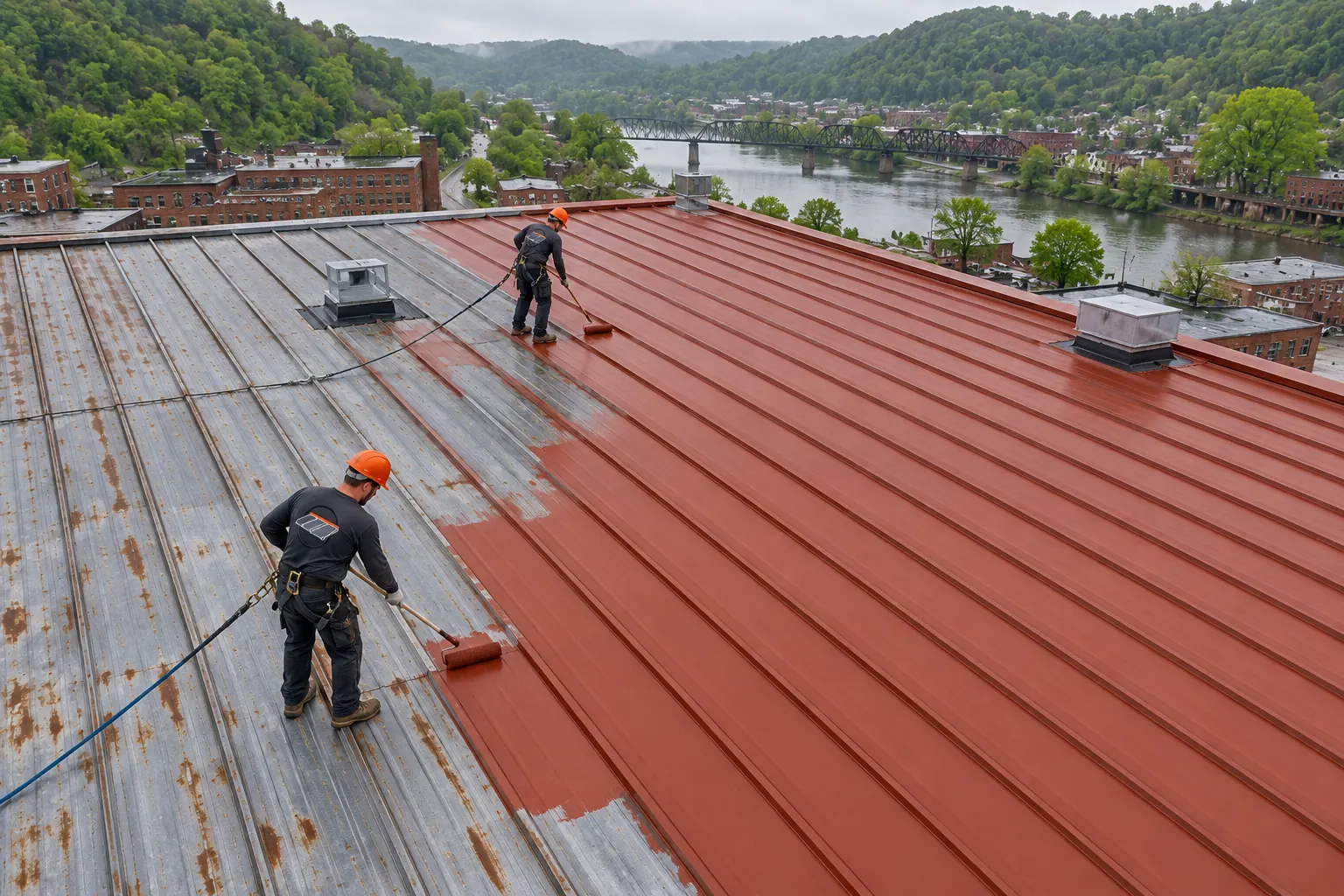
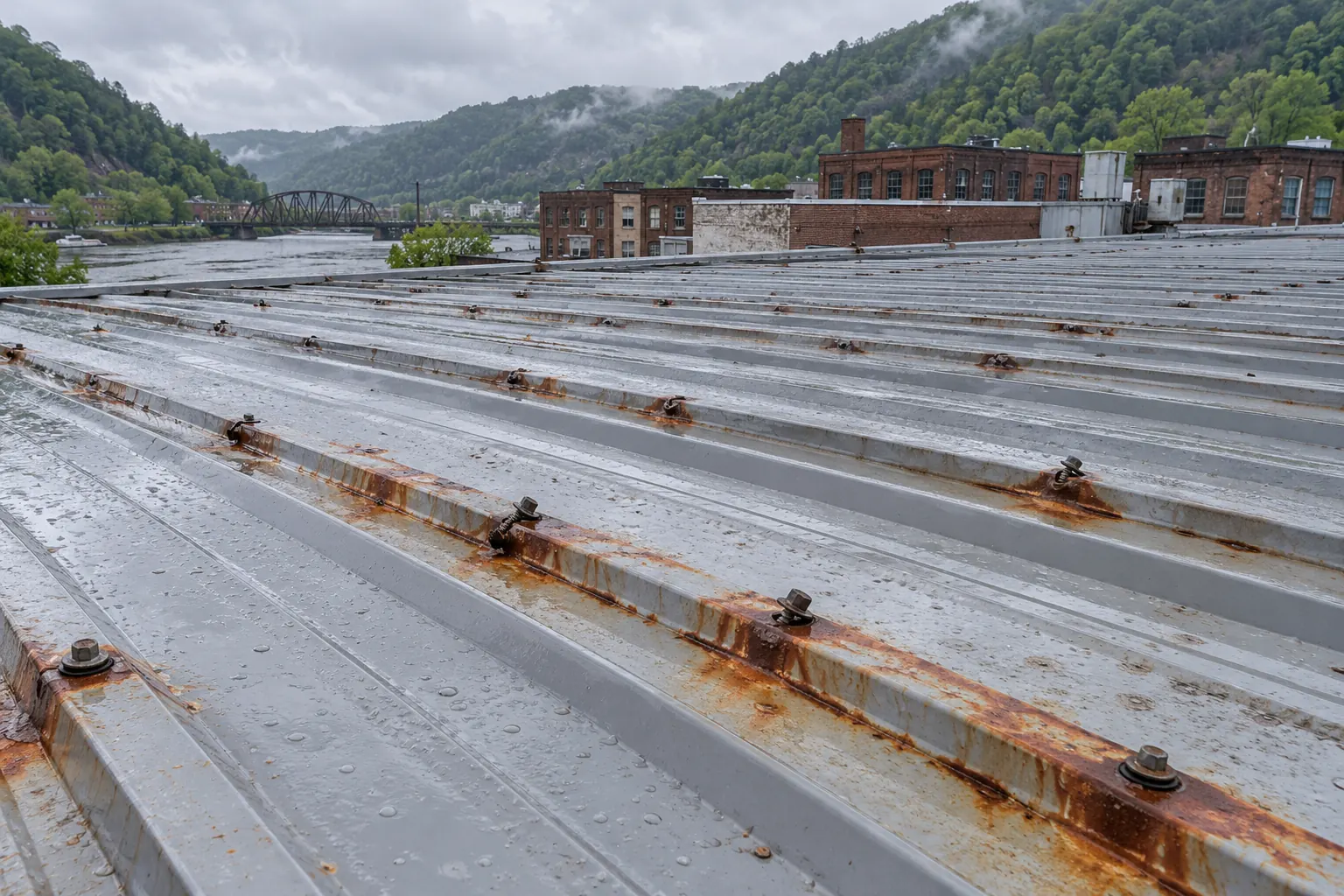
R-panel and standing seam roofs with surface rust and leaks at screws and laps. Panels have to hold a screw firmly.
Metal roof coating →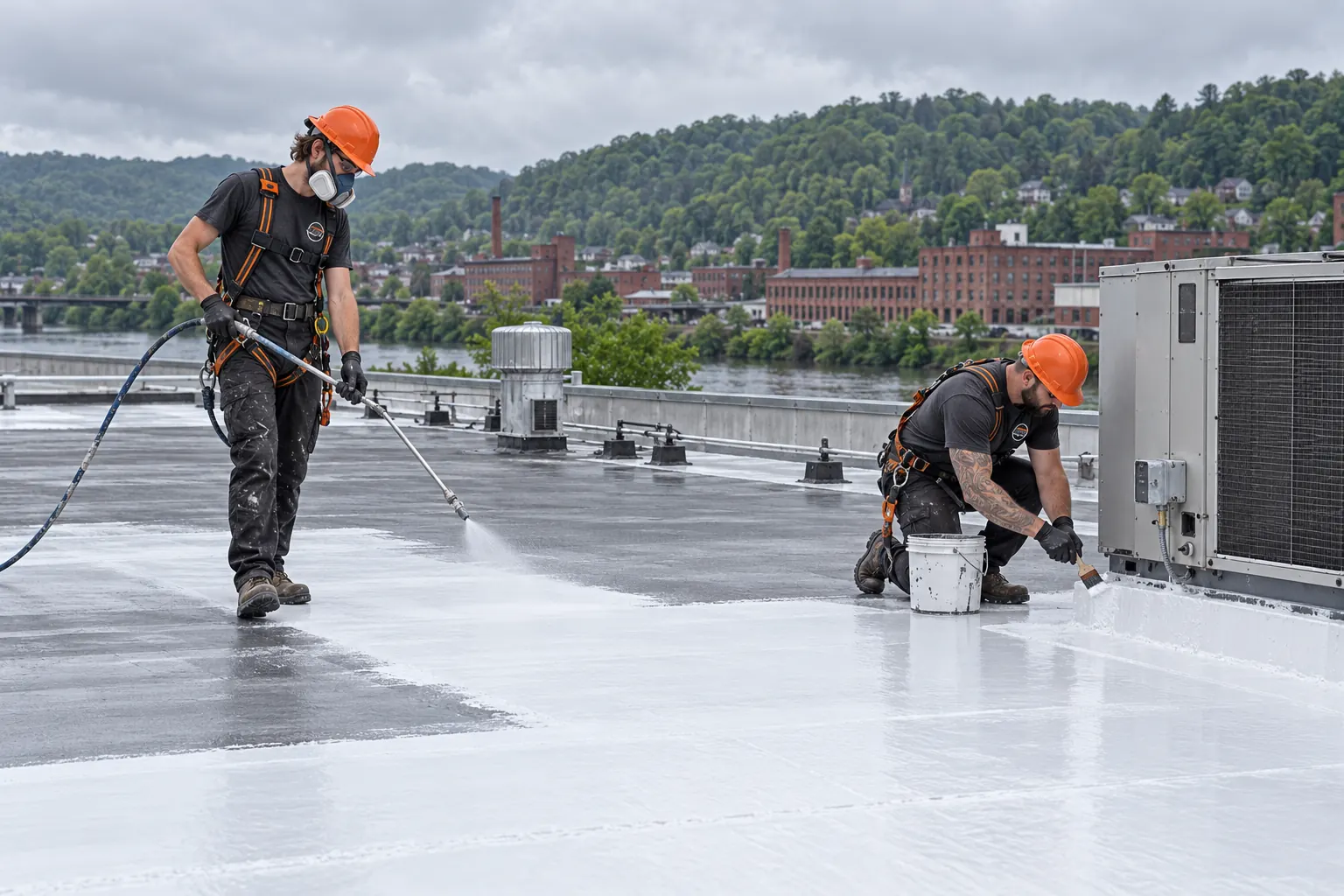
Silicone Roof Coating
Low-slope roofs that hold water behind units, along gutters, or over long runs. Later recoats stay silicone.
Silicone roof coating →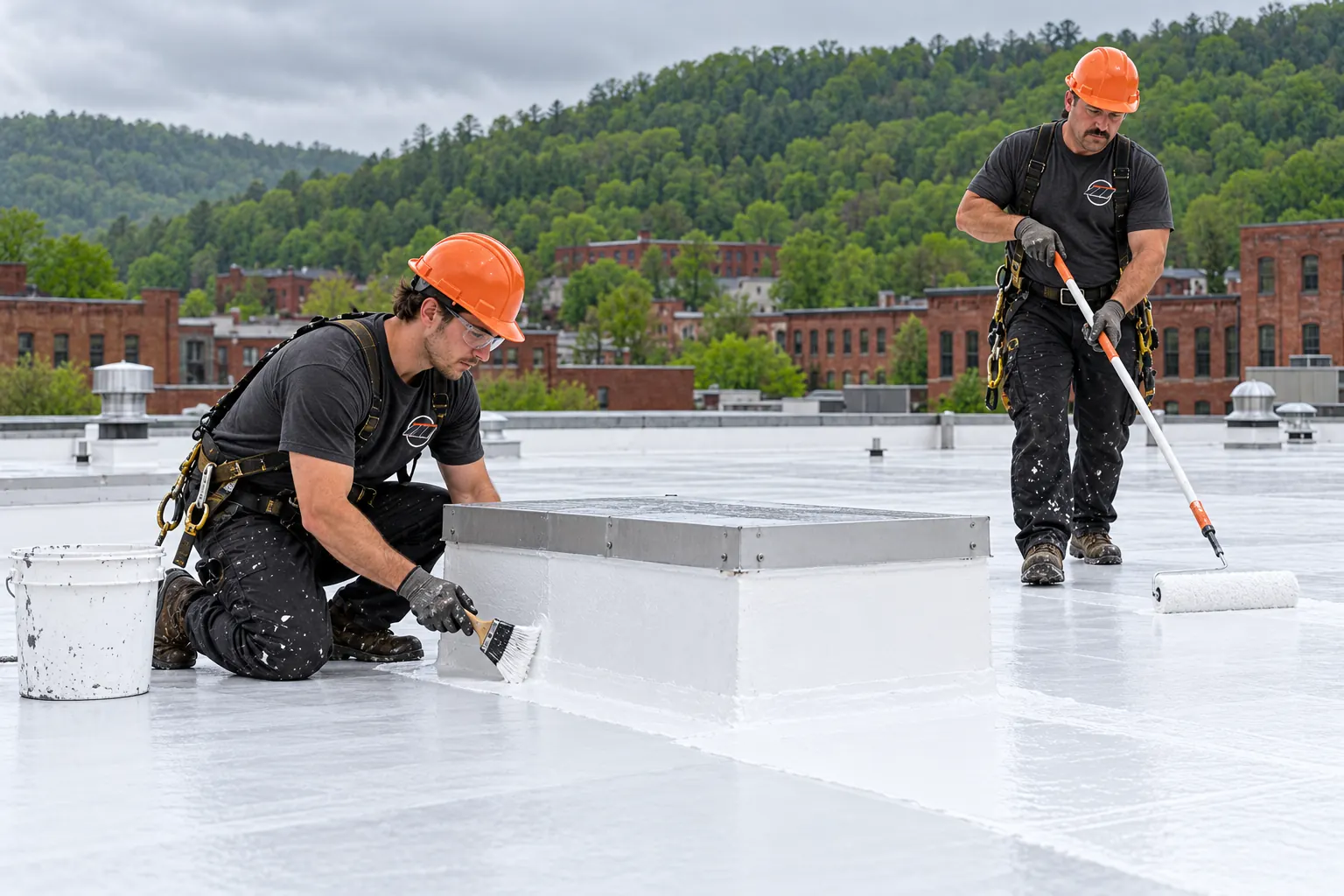
Acrylic Roof Coating
Pitched metal that drains in minutes and should stay bright. Lower cost per gallon, warm and dry days to cure.
Acrylic roof coating →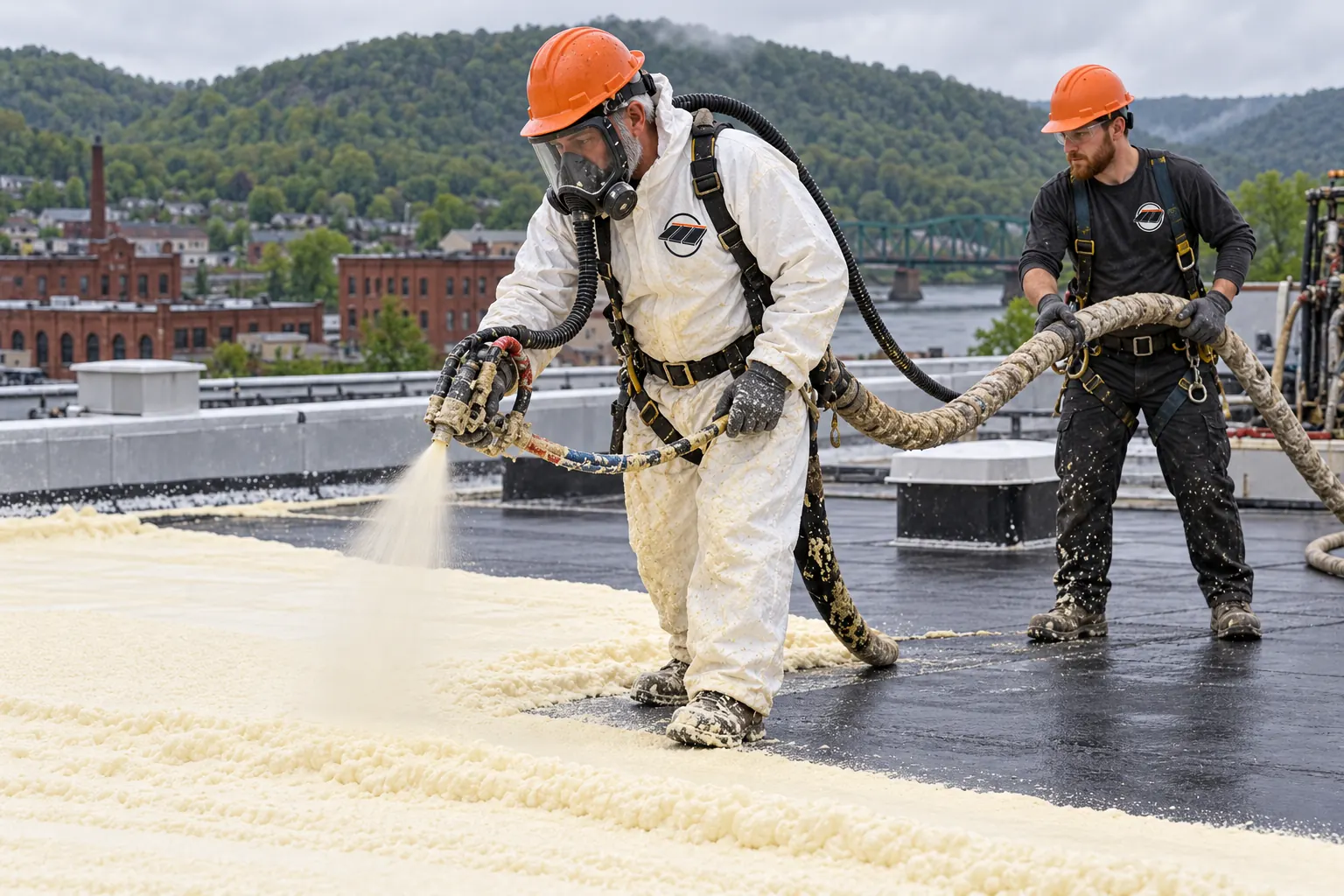
Spray Foam Roofing
Uninsulated metal buildings leaking at most screw lines. Foam fills the ribs and a coating protects it.
Spray foam roofing →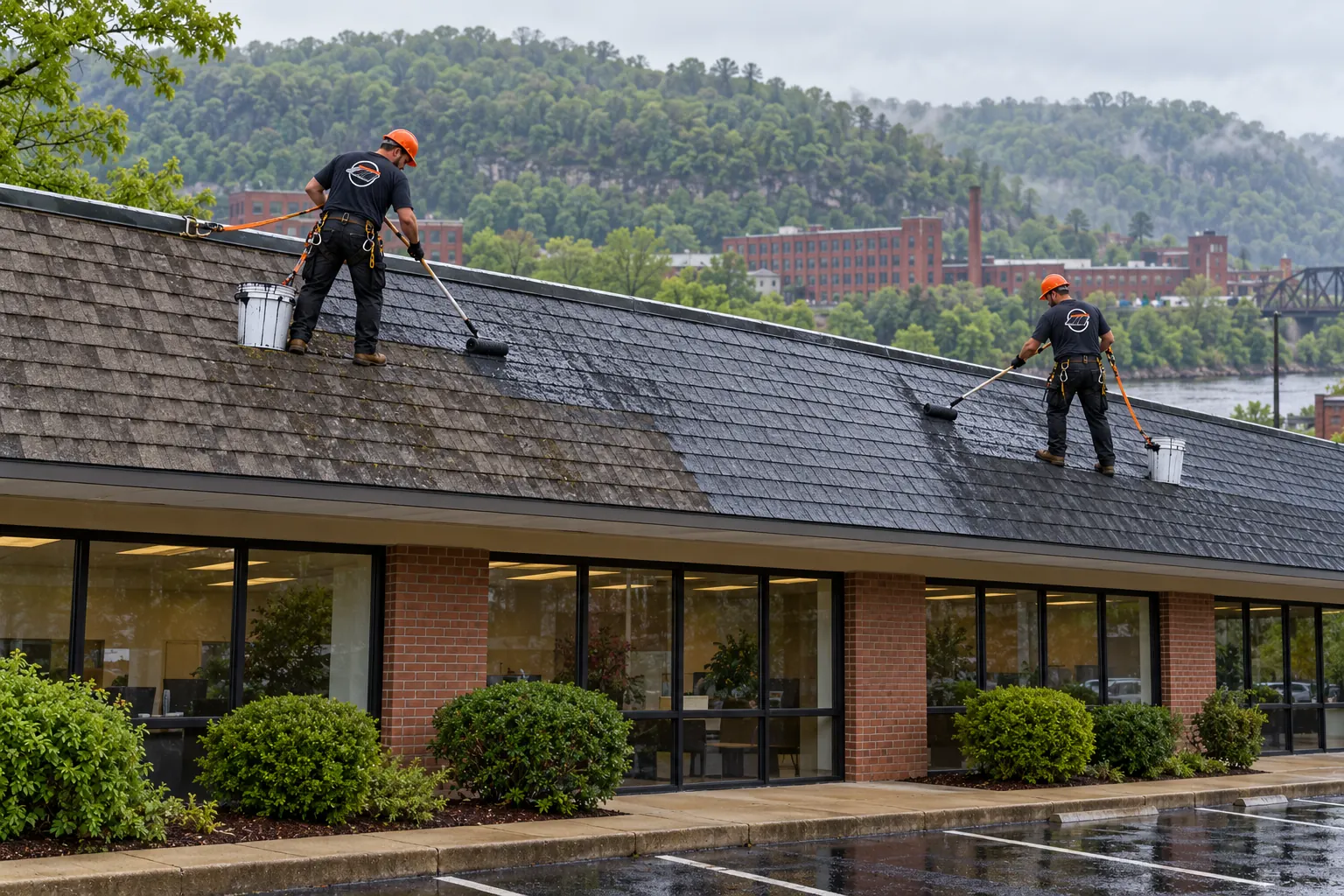
Shingle Roof Coating
Commercial shingle slopes that still lie flat with granules intact, using a product the shingle maker approves.
Shingle roof coating →
Which System Fits Which Roof
This table follows the owner questions we hear most: will water sit on it, how hot does it get, and what happens at the next recoat.
| System | Ponding Water | Dirt Pickup | Recoat Later | Best Fit |
|---|---|---|---|---|
| Silicone | Tolerates it | Collects more grime | Silicone over silicone | Low-slope panels and flat spots |
| Acrylic | Softens under it | Stays cleaner | Acrylic recoats easily | Pitched panels that shed water |
| Spray foam plus coating | Depends on the top coat | Depends on the top coat | Recoat the top layer | Uninsulated warehouses and shops |
| Shingle coating | Not for ponding areas | Varies by product | Same product family | Flat shingles with granules intact |
Not Sure Which System You Need?
Request an inspection. We look at slope, drainage, rust, and insulation, then tell you which system fits each section of the roof.
The Order Of Work For Any System
Every system we install follows the same order. The details inside each step change with the roof.

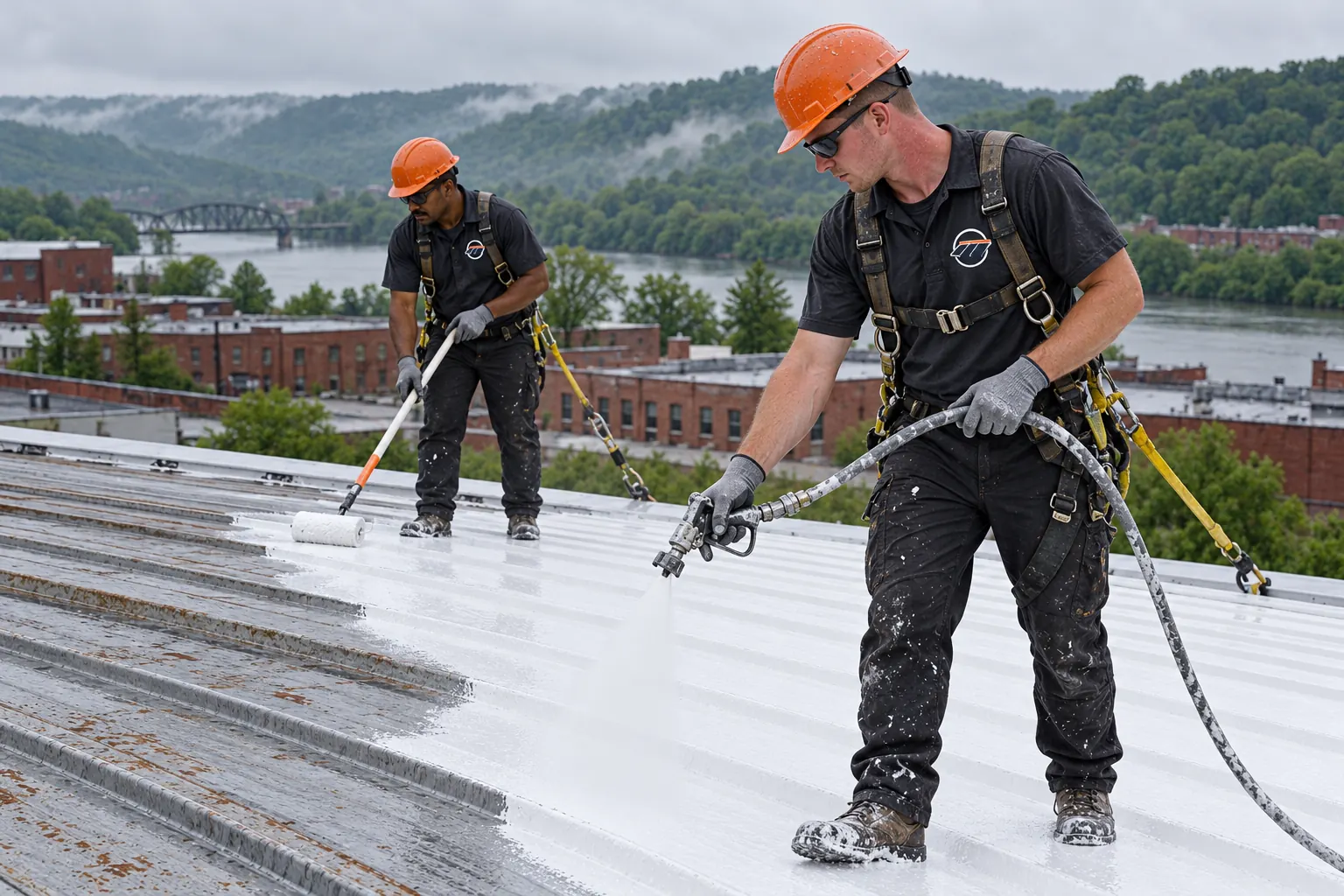
Inspect Your Roof
Slope, drainage, rust, screws, laps, curbs, and insulation all get checked, with photos tied to each spot on a roof plan.
Choose The System
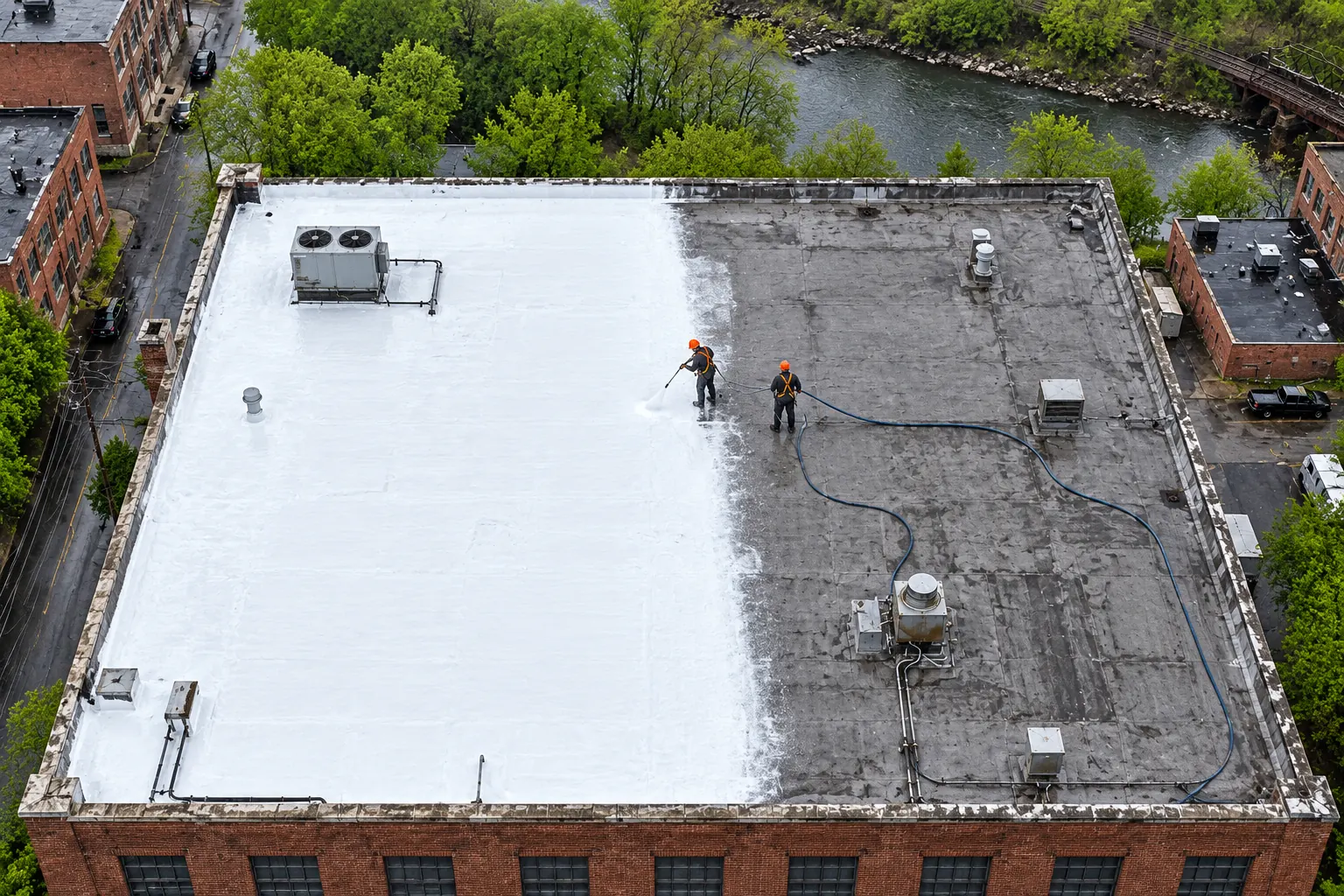
Each section gets a system: silicone where water sits, acrylic on steep faces, foam where insulation is needed.
Prep And Repair
Washing, rust primer, screw work, lap fabric, and curb flashing come before any field coat on every system.
Apply The Coats
Base and top coats, or foam and its top coat, go on to the thickness on the product sheet.
Check And Hand Over
Thickness is gauged, thin spots are touched up, and you get the product names for future recoats.
Questions About Our Services
Answers about screws, system choice, cost, and what happens after the inspection.
Fasteners
What happens to loose or backed-out roof screws?
Every fastener on an exposed-fastener roof gets checked. Loose or stripped screws are tightened or replaced with oversized ones, then each head is sealed with brush-grade sealant or a cap.
Missing screws along ridge caps and eave trim get added, since those edges catch the most wind uplift.
System Choice
Silicone or acrylic for a commercial metal roof?
Silicone handles standing water and weathering better; acrylic costs less per gallon and suits steeper roofs that shed water fast.
Both need the same screw, seam, and rust prep. Some roofs get an acrylic primer layer with a silicone top coat, chosen by slope, drainage, and recoat plans.
Cost
What drives the cost of coating a commercial metal roof?
Square footage sets the base, but screw count, rust level, and seam length usually move the total more than size.
Coating type, number of coats, lift access, and details like skylights, curbs, gutters, and pipe boots also count. A clean, tight roof with few penetrations costs least per square foot.
Next Steps
What happens after the roof inspection?
You get a plain summary of the roof's condition and the path that fits it, from coating alone to restore, re-panel, or replace, with photos tied to each finding.
Then come the system choice, permit questions, weather and operations scheduling, and access and staging. A small test patch can show color and finish first.
Mixed Roofs
Can one building get more than one system?
Yes. A building with steep metal, a flat addition, and a shingle canopy can get acrylic, silicone, and a shingle coating in one job.
Each section is prepped for its own system, and the joints between sections get detailed so water cannot get in where they meet.
Start With A Ballpark Range
Answer seven questions about your roof for a ballpark range, then we confirm the system on the walk.