Low-Slope Roofs That Hold Water
Covington Silicone Roof Coating
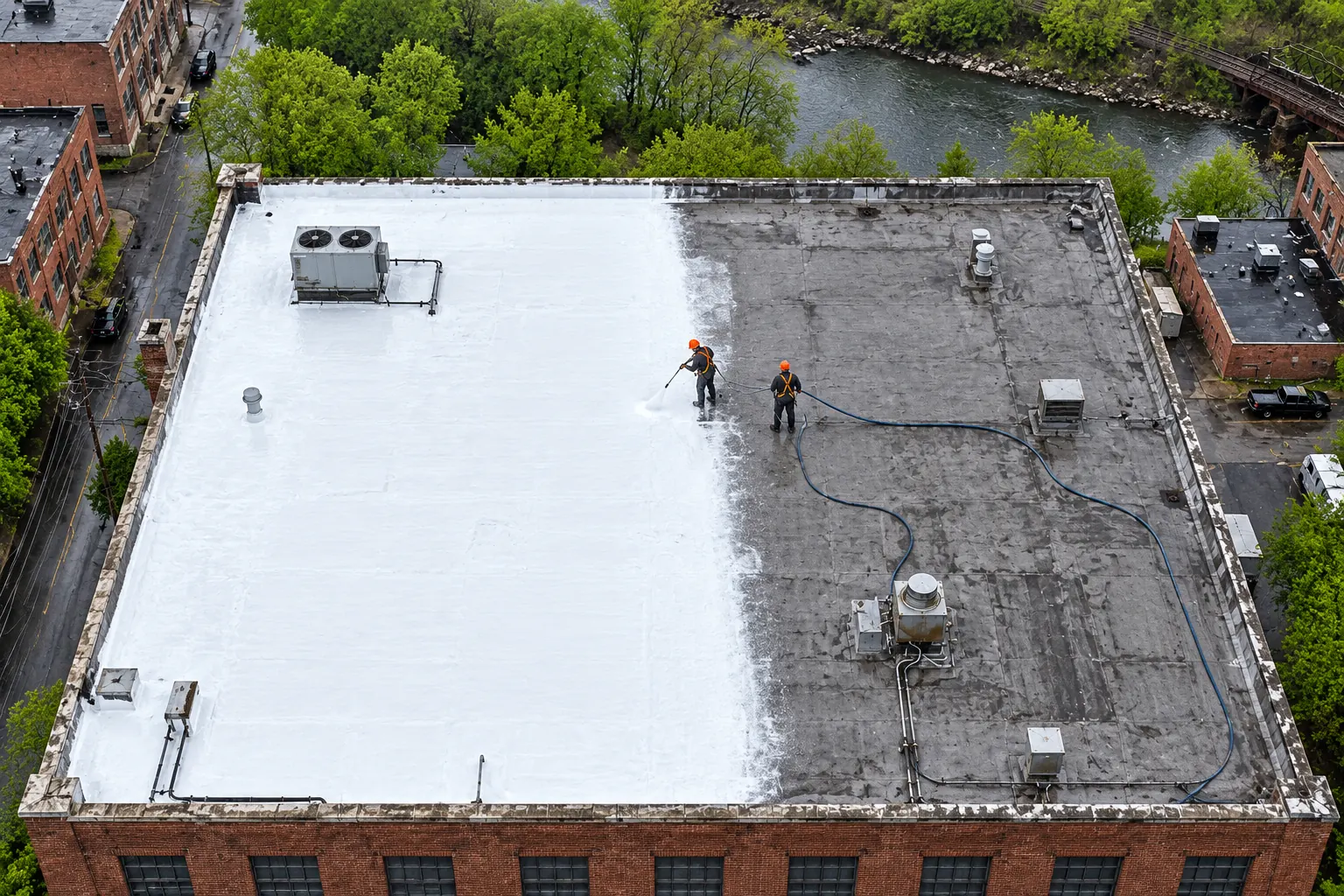
Silicone roof coating for Covington roofs where rain sits for days: low-slope metal, flat decks, and the low spots behind rooftop units.
- R-Panel Roofs
- Standing Seam Roofs
- Low-Slope Roofs
- Shingle Roofs
- Holds up under standing water
- Wider cold-weather window
- Ponding causes checked first
- Recoats stay silicone
Is This Roof A Fit?
Silicone earns its higher price on roofs that drain slowly. On steep panels that shed water fast, acrylic is usually the better buy.
Silicone Fits Here
- Low-slope panels where water lingers at end laps
- Flat spots behind rooftop units
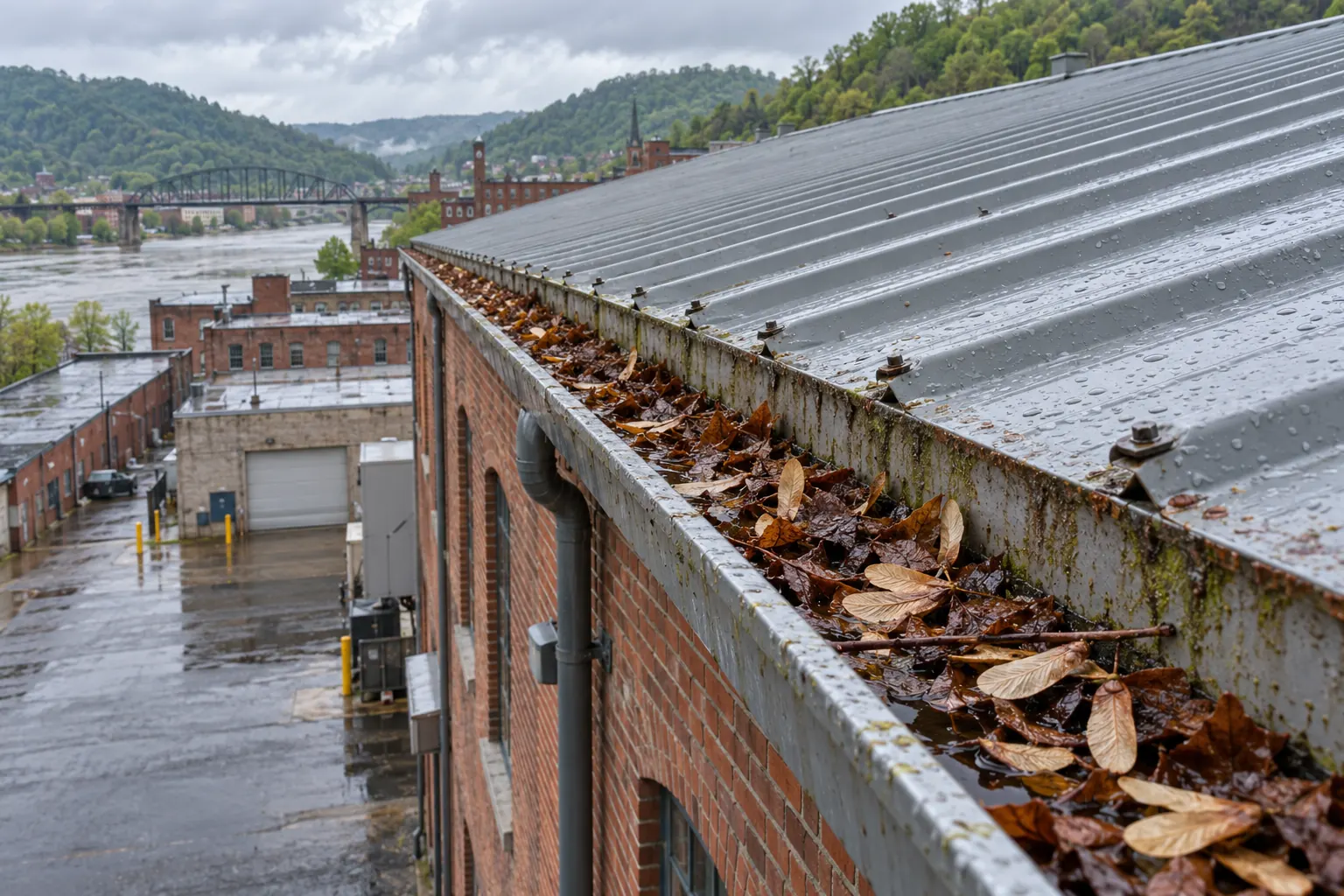
- A sagging gutter that pools water along the eave
- Fall jobs when nights run cooler
- Roofs previously coated with silicone
Look At Other Options
- Steep panels that drain in minutes
- Roofs where dirt pickup would show from the street
- An old acrylic coating you plan to recoat with acrylic
- Ponding caused by a bent purlin nobody has looked at
- Wet insulation under the low spot
Where Water Sits On Low-Slope Roofs
Standing water shows up in the same few places on Northern Kentucky roofs. We find the cause before choosing where silicone goes.
- Watch
Dirt Rings After Rain
A brown ring on the roof marks where water stood and dried. Small rings near drains are common; rings wider than a pickup bed get measured.
- Repair First
Gutter Sagging Off The Eave
Bent hangers let a gutter dip, and water backs up over the panel ends. Rehanging it comes before any coating on the eave.
- Repair First
Pools Behind Rooftop Units
Units on curbs block flow on the uphill side. Water sits against the curb flashing, so those corners get fabric and extra silicone.
- Repair First
Crushed Or Clogged Downspouts
Leaves and a dented elbow can stop a whole roof section from draining. Clearing it is a simple fix that changes how much ponding is left.
- Call Now
Dips Over Deflected Purlins
A low area mid-span can mean framing has bent. That is a structural item for the owner and an engineer before any coat goes on.
- Call Now
Drips Under Ponded Laps
End laps sitting in water leak first. Interior stains below a pond tell us which laps to open, clean, and reinforce.
Commercial Roof Coating Options for Covington
Silicone goes over several roof types here. The base layer and primer change with the surface underneath.
| Option | Goes Over | Prep First | Later Recoat |
|---|---|---|---|
| Silicone over metal | Low-slope R-panel or standing seam | Rust primer, sealed screws, fabric at laps | Clean and recoat with silicone |
| Acrylic base, silicone top | Metal panels needing a primer layer | Acrylic primer coat after rust treatment | Silicone over the top layer |
| Silicone over a flat roof | Built-up or single-ply decks on older blocks | Moisture check, blister and seam repair | Silicone only |
| Silicone over foam | Spray foam that needs its UV coat | Foam surface cleaned and dry | Silicone only |
Benefits of Coating Your Roof
Silicone is chosen for drainage problems. These gains apply when the deck is dry and the ponding cause has been checked.
- Low-Slope Warehouses
- Flat-Roof Commercial Blocks
- Strip Centers
- Distribution Buildings
Stands Up To Ponding
Water that sits for days on a low roof breaks down acrylic. Silicone keeps its film under that water, which protects the laps and washers below.
Cheaper Than A Tear-Off
A silicone restoration keeps the existing roof in place, so you avoid disposal costs and a long stretch with an open deck over your inventory.
More Workable Days
Silicone goes on across a wider temperature range than acrylic, which helps when a roof job slips into the cooler weeks of fall.
Simple Future Recoats
When the coat wears, a cleaned roof takes another layer of silicone. Keep the product name on file so the recoat matches.
Water Standing On Your Roof?
Start with the roof size and condition. Tell us where water sits after a rain, and we check those spots first on the walk.
Our Silicone Coating Process
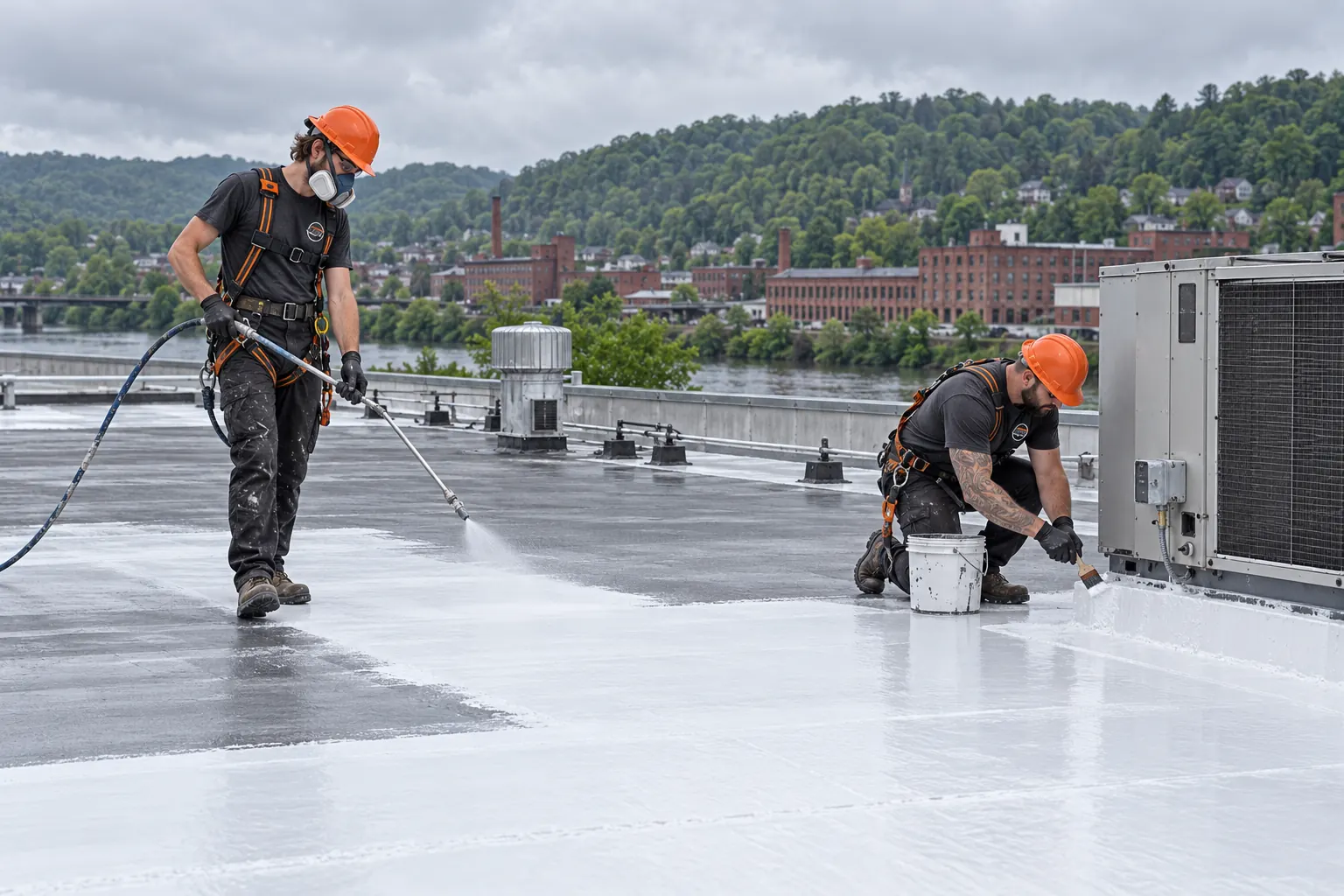
Silicone only bonds to a clean, dry surface, and it does not stick to much once it cures. These steps keep both in mind.

Inspect Your Roof
We map every pond with tape and photos, check the gutters and downspouts feeding it, and test for wet insulation under the low spots.
Fix The Drainage Causes
Sagging gutters get rehung and clogged downspouts get cleared. If a purlin has bent, you get that finding in writing before any coating.
Clean And Detail
Panels are washed and dried. Screws get sealed, laps and curb corners get fabric, and rust gets primed with a product listed for silicone.
Spray The Silicone
Silicone goes on in one or two passes to the product sheet thickness, heavier at laps and around the units where water sits.
Check Film And Flow
A gauge confirms thickness on flats and ribs. After the next rain, ponds should sit on silicone instead of bare laps.
Pair Silicone With These
Silicone is often one part of the job. These services cover the panels and the higher sections next to it.
Metal Roof Coating
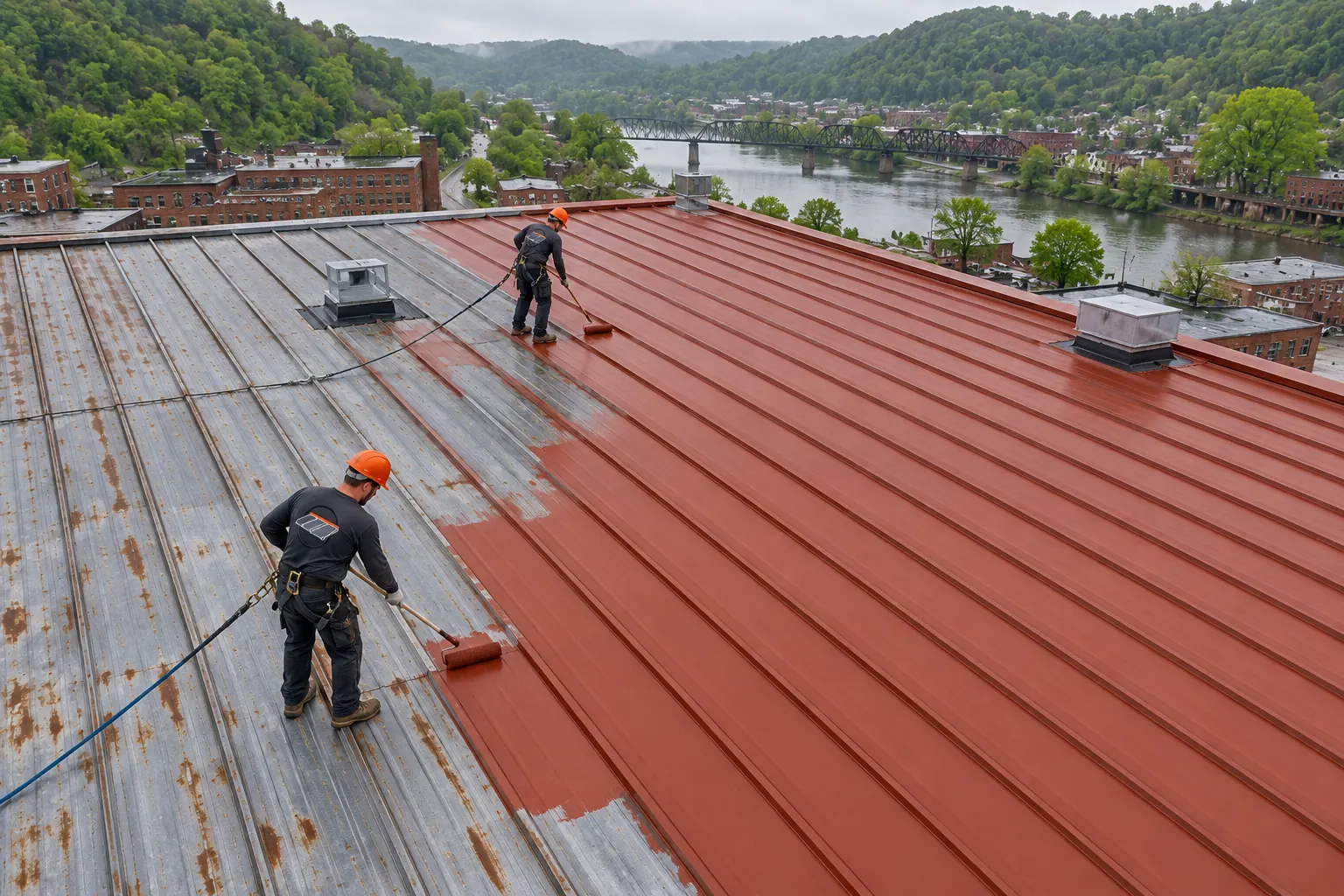
Rust, screws, and laps on the metal panels get their full prep under metal roof coating before silicone tops the low sections.
Metal roof coating →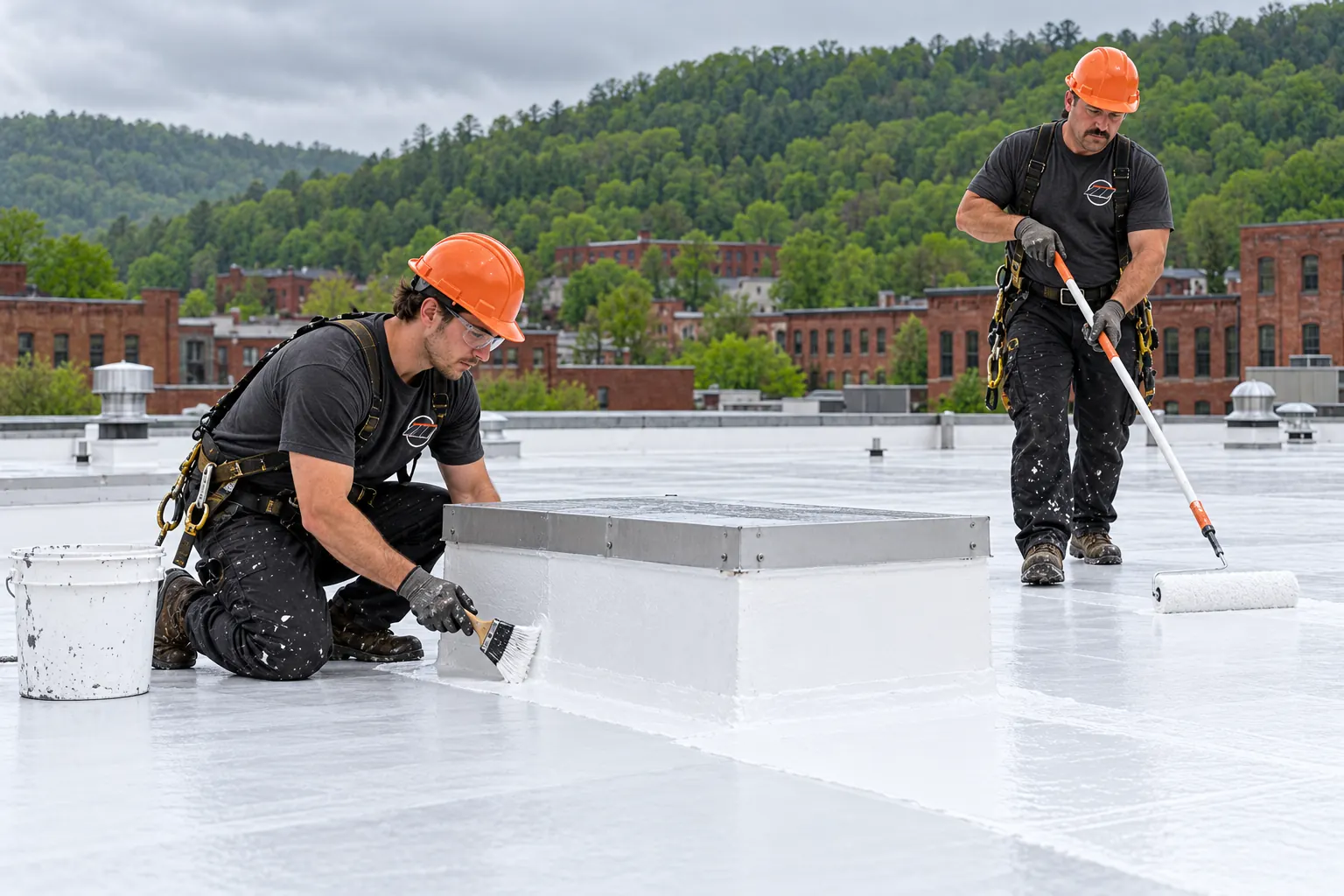
Acrylic Roof Coating
Steeper slopes on the same building that shed water fast can take acrylic, which costs less per gallon and picks up less dirt.
Acrylic roof coating →
Silicone Coating Questions
Answers about ponding, weather, and recoats on Covington roofs.
Ponding
Which coating works where water ponds near gutters or low spots?
Silicone, because it resists breakdown under standing water. On metal roofs, ponds form along sagging gutters, behind units, and over deflected purlins.
The cause gets checked first. A clogged downspout is a quick fix; a bent purlin is a structural item for you and an engineer. The coating protects the surface while water evaporates.
Weather
How do Northern Kentucky winters and summers affect a coated metal roof?
Panels here swing from hot afternoons to freezing nights, so the coating has to stretch and recover. Elastomeric coatings handle that movement, and seam reinforcement matters more than thickness alone.
Ice at the eaves pushes meltwater under end laps, so those laps get fabric. Morning dew near the river delays starts until panels dry.
Recoats
Can I put acrylic over a silicone roof later?
Generally, no. Most coatings do not bond to cured silicone, so a silicone roof is recoated with silicone.
That is why we record the product name and batch on your roof file. Years later, the recoat starts with a wash and a test patch of the same product.
Dirt
Will a silicone roof stay white?
It picks up more grime than acrylic, especially near exhaust fans, loading docks, and rooftop units.
A gentle rinse during routine roof checks brings back much of the reflectance. Dirt does not harm the coating; it mostly affects how much sun the roof turns away.
Prep
Does a pond have to be gone before silicone goes on?
The water does. Silicone is applied to a dry surface, so crews squeegee standing water and wait for the spot to dry.
Correcting the slope itself is separate work. We tell you which ponds come from a gutter or downspout we can fix and which come from framing.
Get A Silicone Coating Price
Enter the roof area for a ballpark range, then we map the ponds and confirm the prep on site.