Most metal roofs give warning before a ceiling tile drops. Match what you see on your roof to these six signs, from things to watch to leaks that need a call today.
Watch keep an eye on itRepair First fix before coatingCall Now water is getting in
Watch
Chalky, Faded Panels
Rub a panel and your hand comes away white. The factory paint is wearing thin, but the steel under it is still solid, so this roof is an easy coating candidate.
Watch
White Rust In The Gutters
Powdery white spots on galvanized gutters and downspouts are zinc oxide. River fog feeds it. The metal gets scrubbed and primed with a galvanized primer before any coat goes on.
Repair First
Screws Backing Out
Heads stand proud of the panel and the rubber washers have cracked. Years of heat and cold work them loose, and each one is a small hole in your roof.
Repair First
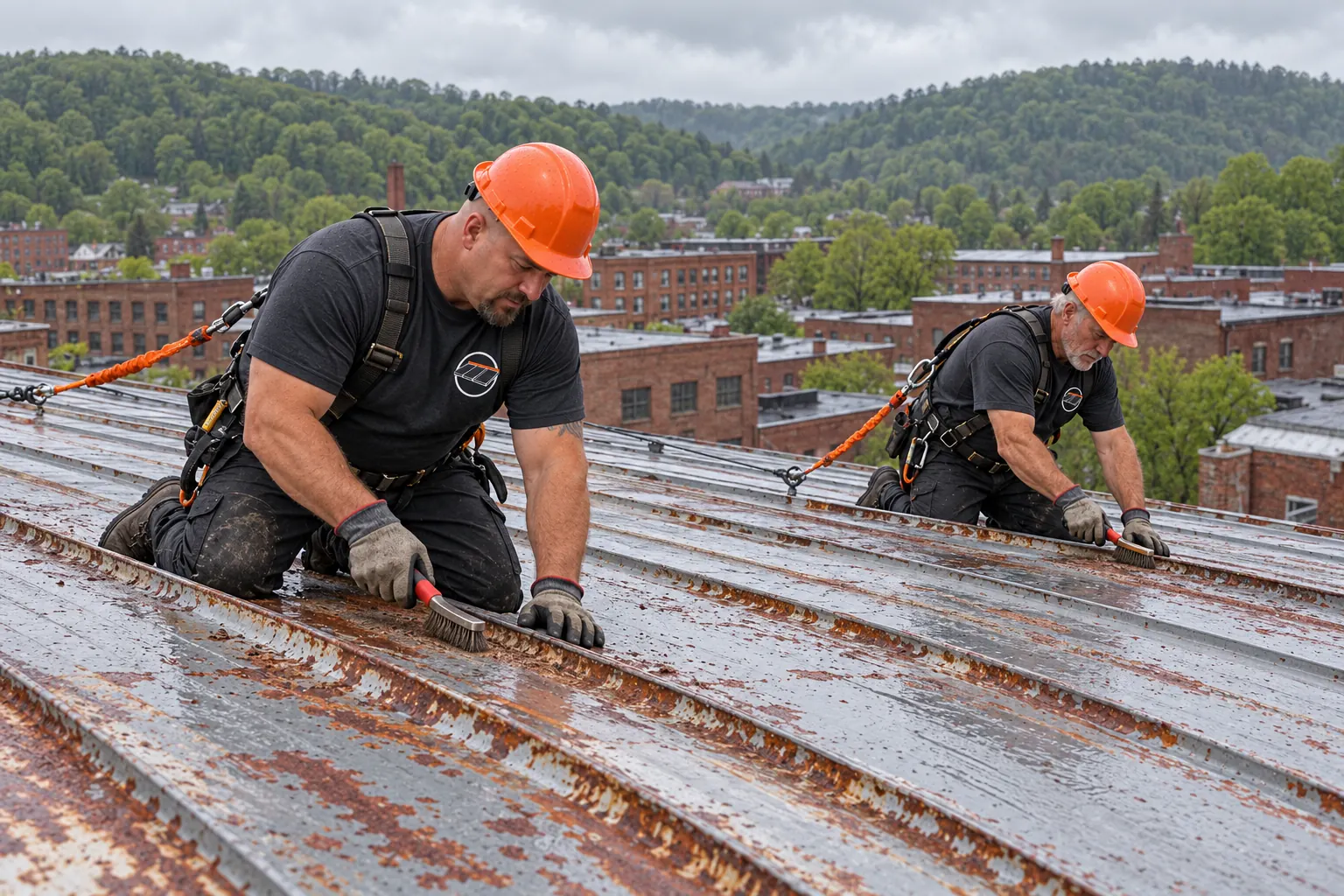
Rust Bloom At Panel Ends
Orange streaks gather where panels overlap at the eaves and end laps. Surface rust gets ground and primed; rust holes get a metal patch first.
Call Now
Drips Along A Purlin
Water inside often lands downhill from the real leak, since it runs along the purlins first. A dated mark on a floor plan helps us trace it back to the lap or screw.
Call Now
Water Sitting At The Eave
Standing water behind a sagging gutter or rooftop unit soaks end laps and washers. We clear the cause during prep, and silicone handles the spots that still hold water.
Coat It Now Or Fix It First?
Coating works on metal that still holds a screw tightly. Here is how we sort a roof before anyone orders material.
Ready For Coating
Faded or chalky paint over solid steel
Surface rust that wire brushing removes
Leaks at screws, laps, ridge caps, or curbs
Panels that stay firm when you walk the ribs
Gutters with white rust but no holes
Repair Or Replace First
Rust holes you can see daylight through
Panels that flex or dent underfoot
Decking that sags at the eaves
Bent purlins under a heavy rooftop unit
Wet insulation that stays wet after a dry week
How A Metal Roof Coating Job Runs
Each step dries or cures before the next one starts, so the weather and the roof set the pace more than crew size.
Step 1: InspectStep 3: Fix Details
1
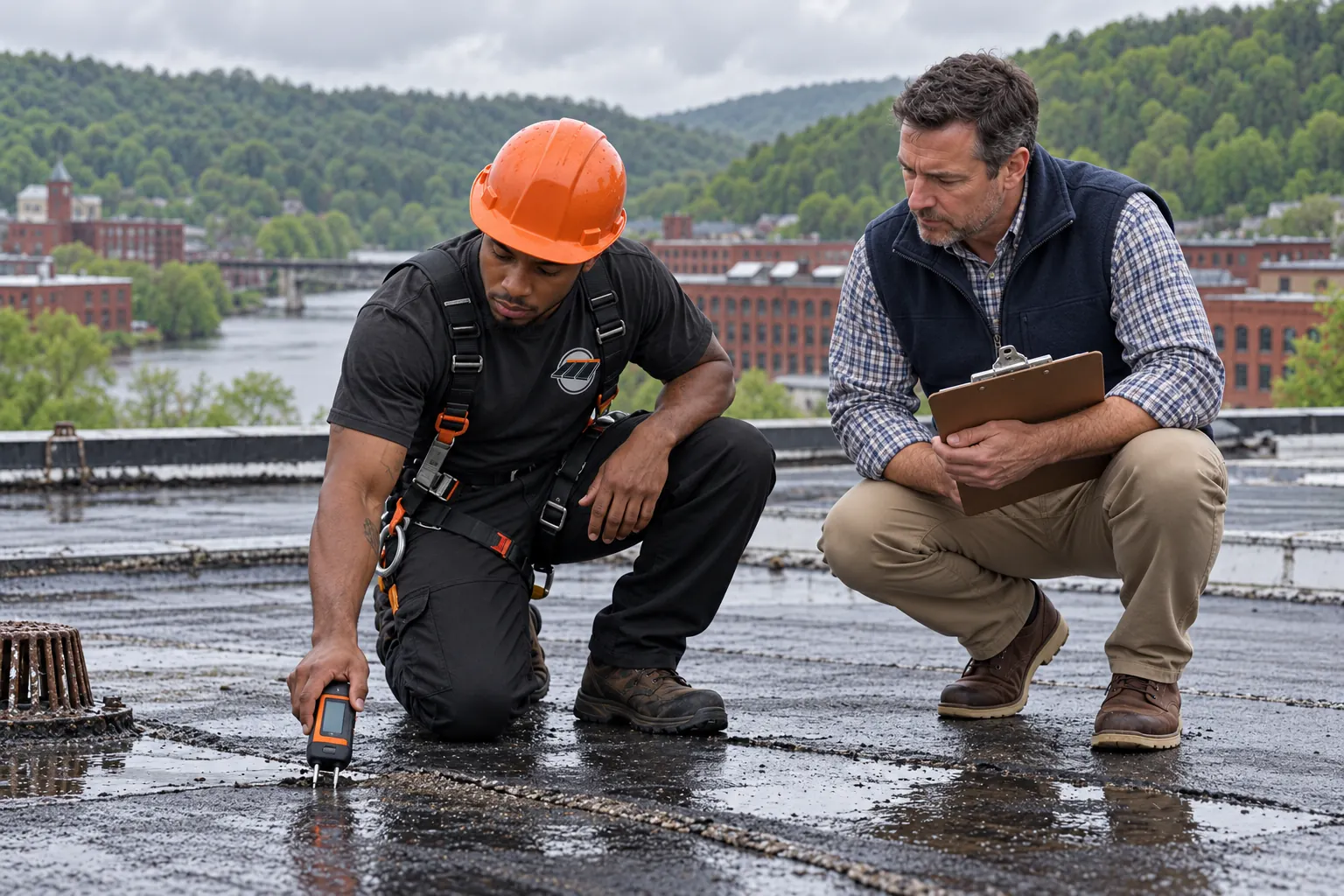
Inspect Your Roof
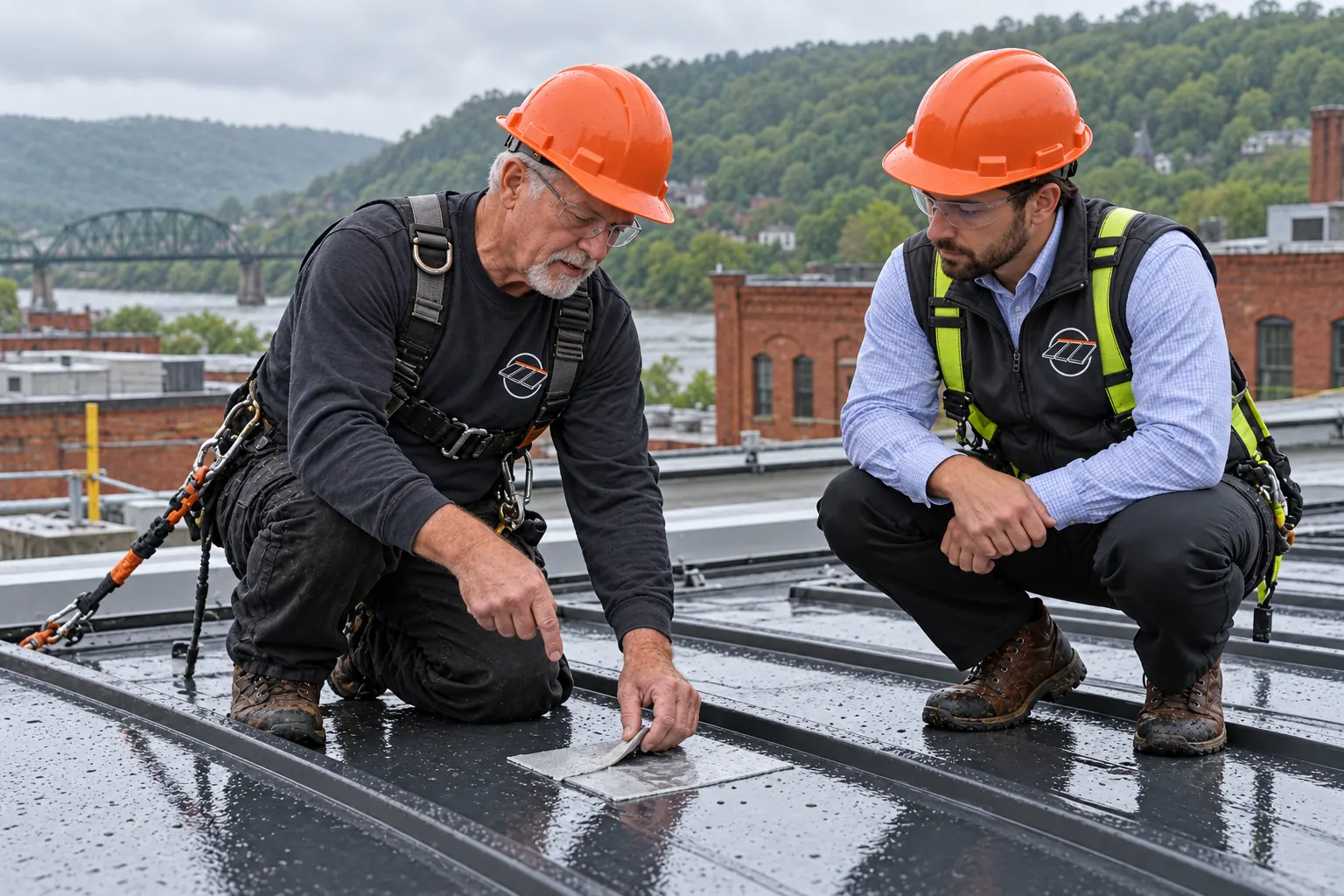
We walk every panel, probe rusty eaves with a screwdriver, check laps and flashing, and look at the deck from inside where we can. You get photos of each problem spot.
2
Wash The Panels
Pressure washing strips chalk, dirt, moss, and loose paint. Coating only grips clean metal, so this step decides how long the finish lasts.
3
Treat Rust And Fix Details
Red rust gets ground and primed. Loose screws are tightened or swapped for oversized ones, then sealed. Laps get fabric, and split pipe boots get replaced.
4
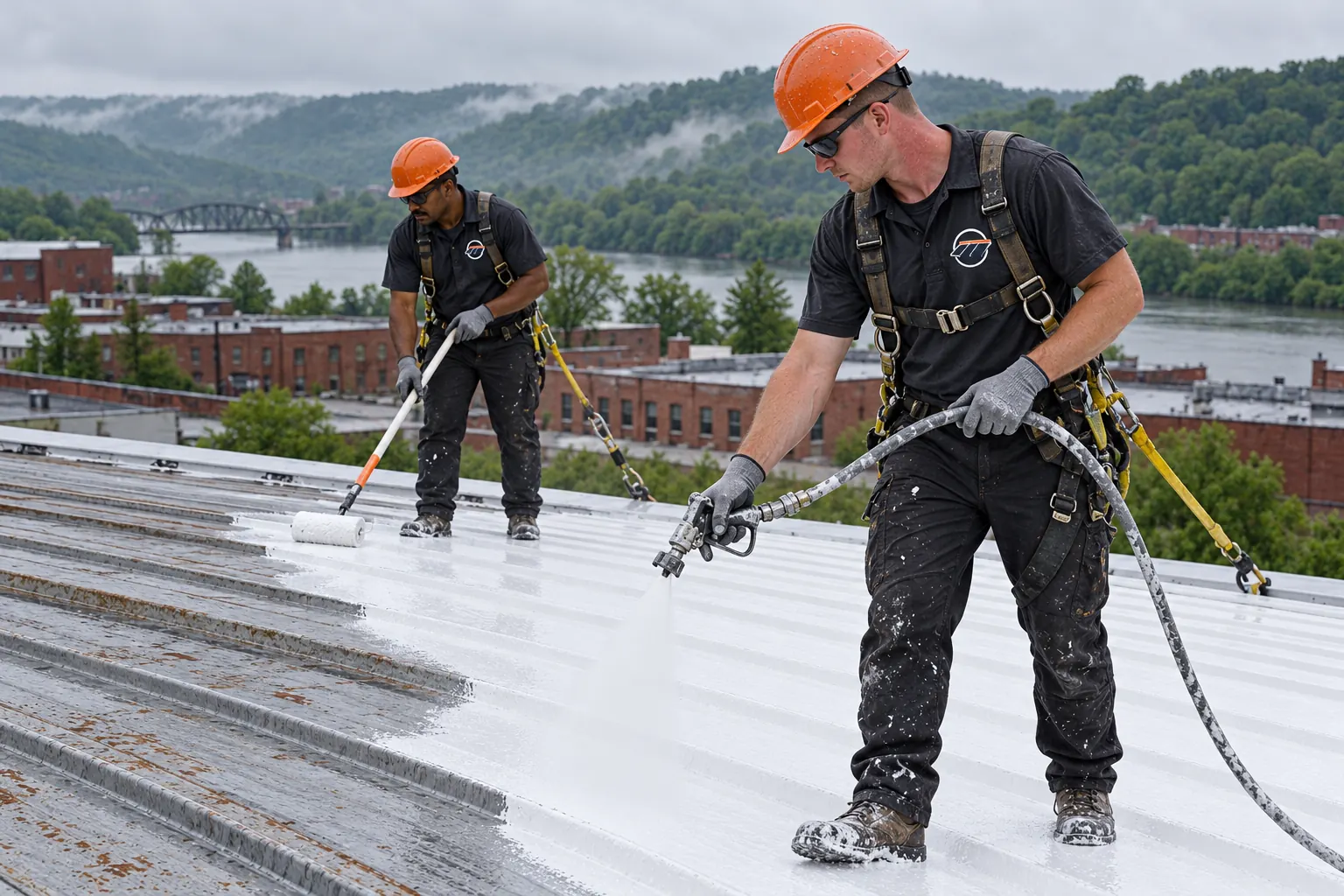
Coat The Field
Base and top coats go on by spray or roller to the thickness the product sheet calls for, starting after the morning dew burns off the panels.
5
Walk It Again
A wet-film gauge confirms thickness. Thin spots get touched up, gutters get cleared, and you see the finished laps and curbs before we pack up.
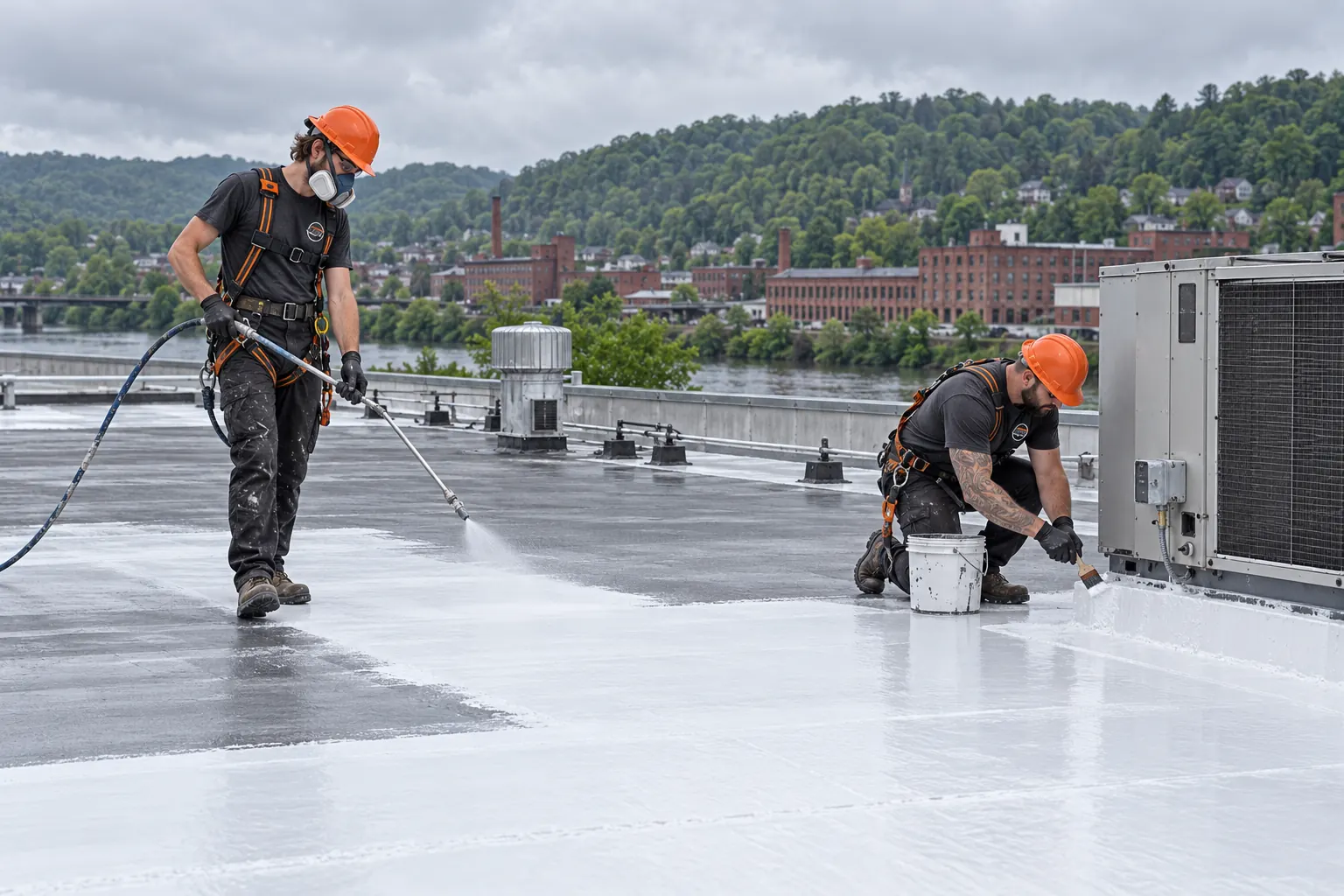
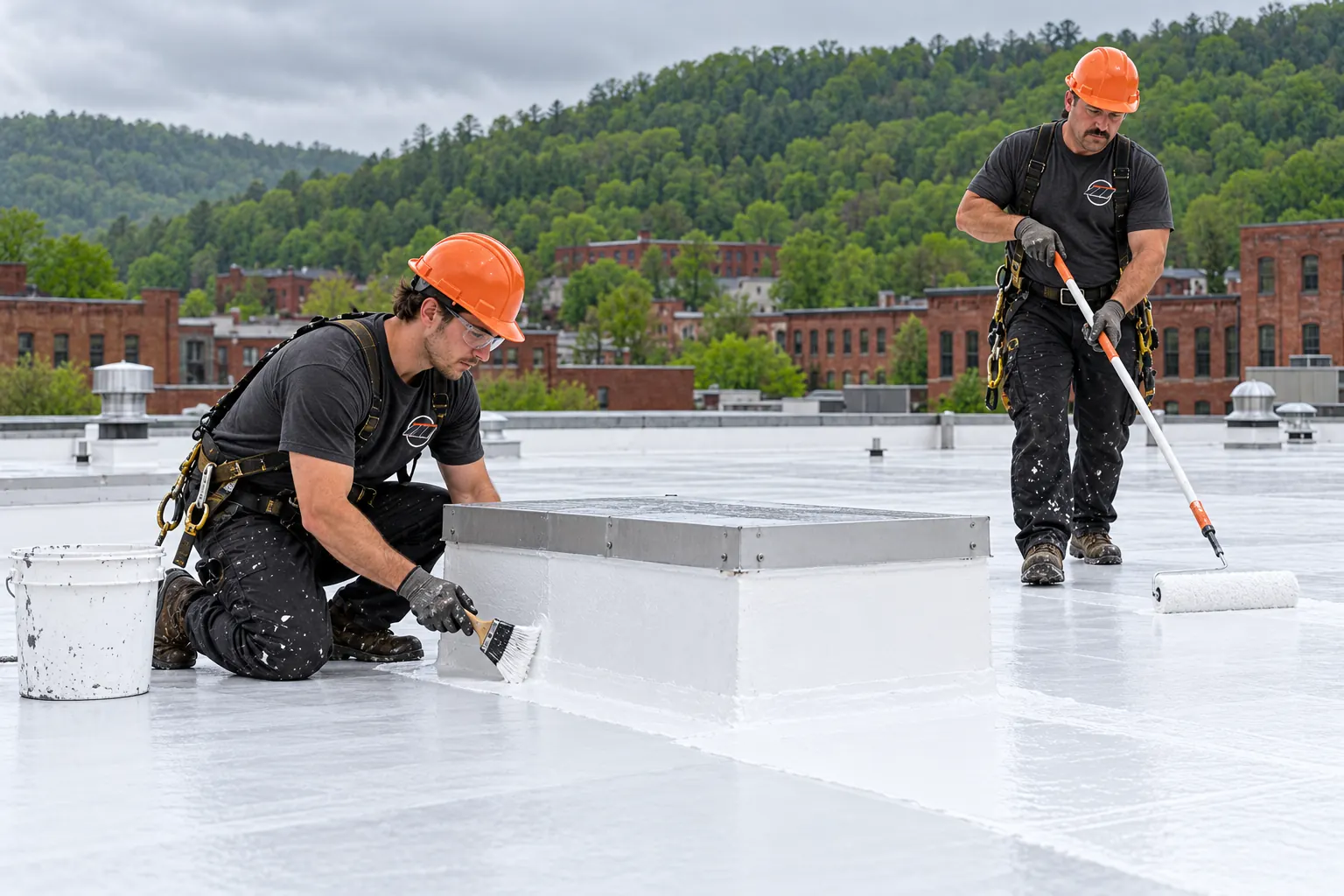
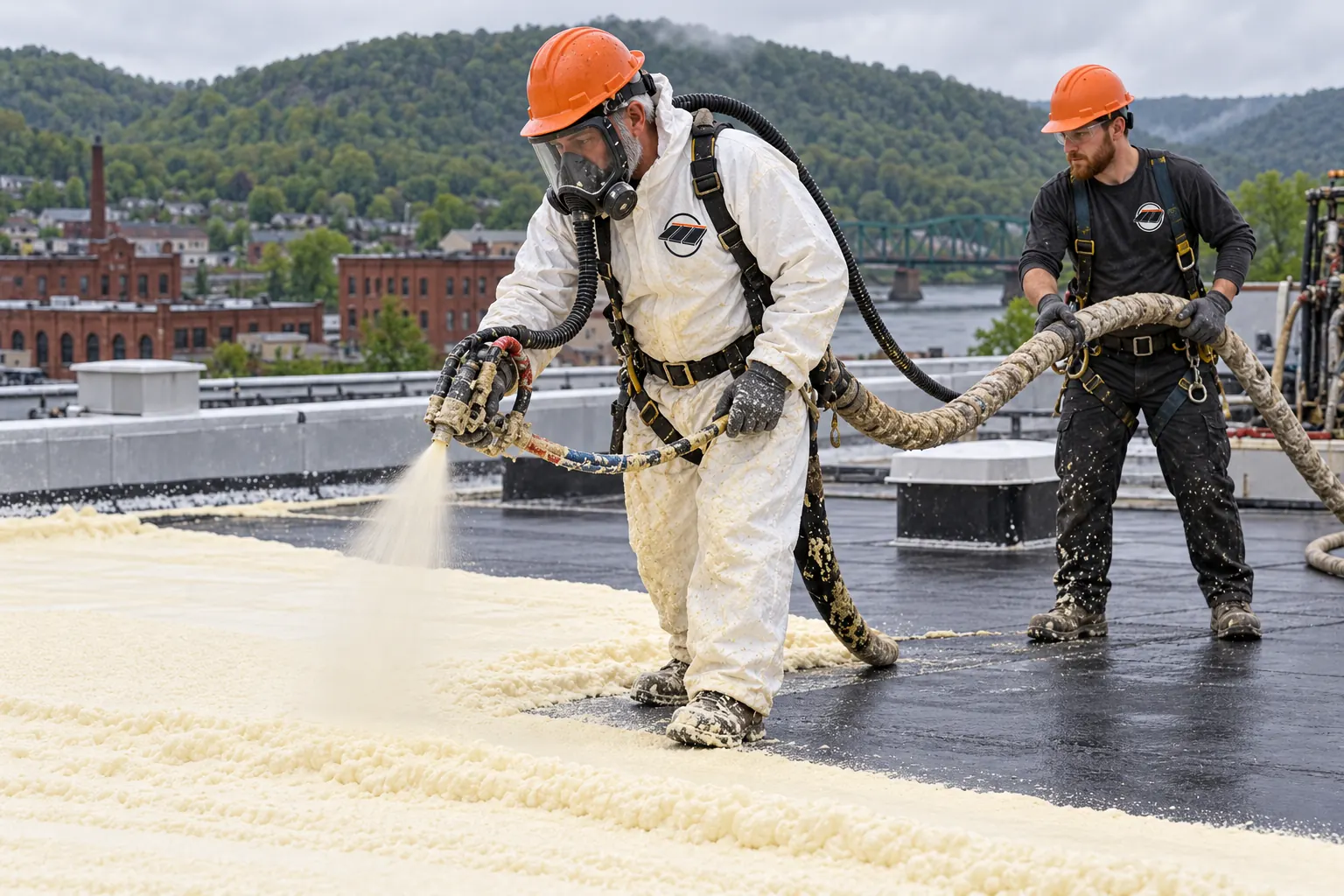
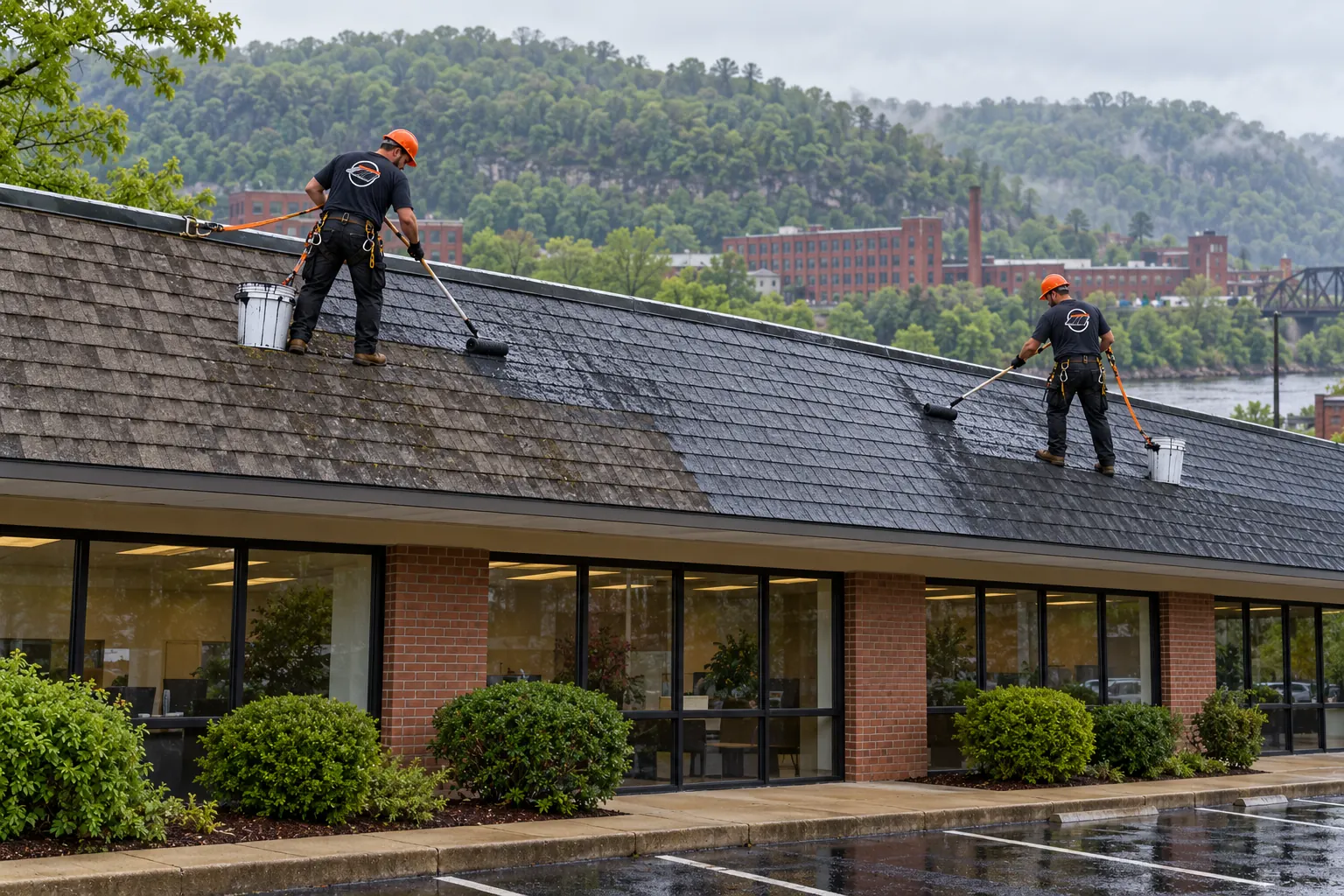
We coat commercial roofs with five systems. Metal is our main work, and the other four cover the low-slope, foam, and shingle roofs that often sit beside it.
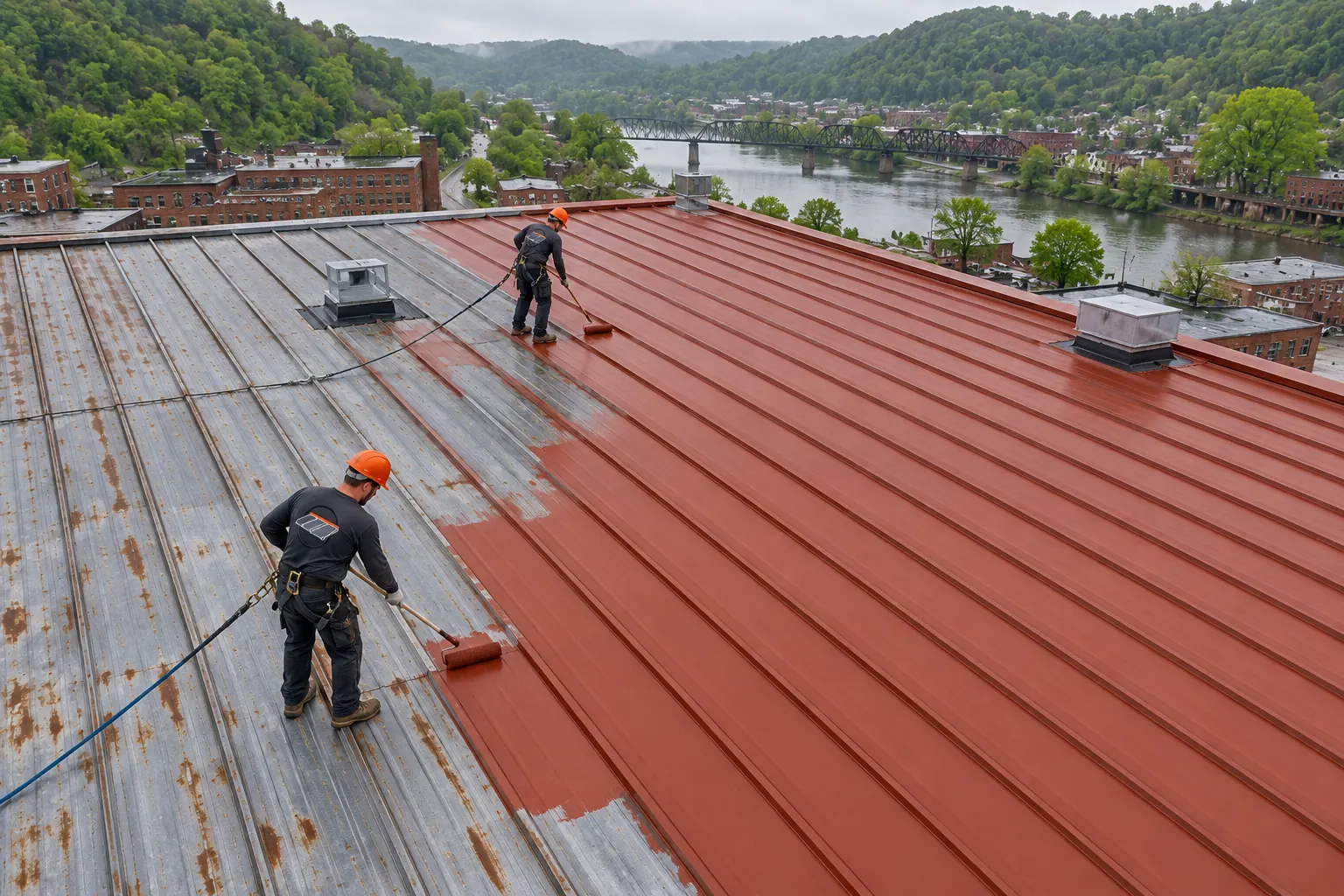
R-Panel And Standing Seam
Metal Roof Coating
Fasteners, laps, and rust get fixed first, then a continuous membrane covers the panels. The original steel stays in place and keeps carrying the load.
Strip centers, offices, and churches with shingles that still lie flat and hold their granules can be coated with a product the shingle maker approves.
Owners of these Covington buildings call us most. Here is what a coating job can do for each of them when the steel underneath is still solid.
Warehouses
Machine Shops
Churches
Older Industrial Buildings
Agricultural Barns
Strip Centers
Spend Less Than A Re-Roof
Panels stay on, so you pay for screws, seam work, and coating instead of tear-off, new steel, and new trim.
Keep The Doors Open
Crews work on top of the existing roof. Inside, staff hear foot traffic and see wash water at the gutters, and the loading dock keeps running.
Less Steel To The Landfill
A coated roof keeps its original panels and trim, so dumpsters of old metal and fasteners stay off your lot.
Recoat Later Instead Of Replacing
When the top coat wears, a cleaned roof can take a fresh coat of the same product, as long as the panels and laps are still tight.
Nearby Towns We Work In
Not sure your building is in our area? Feel free to call us or send us a message. We coat commercial metal roofs in Covington and the six river cities below.
Short answers to the questions we hear on the first roof walk. The full list is on our metal roof coating FAQ page.
Basics
What does a coating actually do for an old metal roof?
It lays a rubbery membrane over the panels that blocks water at the screws, laps, and flashing, which is where metal roofs leak, and it slows new rust.
The panels stay where they are and keep carrying the load. A light top coat also reflects sun, so the deck runs cooler on summer afternoons.
Process
What are the steps in a metal roof coating job?
Inspection comes first, then washing, rust treatment, and detail work on screws, laps, curbs, and bad panels.
After that the base and top coats go on, and a final walk checks film thickness and clears the gutters. Each layer has to dry before the next, so drying time sets the schedule.
Taxes
Does Section 179 apply to a commercial roof coating project?
It can. IRS Publication 946 lists roofs on existing nonresidential buildings as qualified real property for Section 179, and the 2026 deduction limit is $2,560,000.
Ask your CPA whether your coating counts as an improvement or a repair, and keep invoices that list screw replacement, seam work, and coating separately.
Timing
What time of year do metal roofs get coated around Covington?
Late spring through early fall gives the most working days. Panels need to be dry and above the product's minimum temperature, and river-valley dew delays morning starts.
Silicone tolerates cooler days than acrylic, so late-season jobs often use it. Wet spring weeks can push a start date by a day or two.
Getting Started
What should I have ready when we come to look at the roof?
A floor plan with leak spots and dates helps most, along with any notes on past caulk repairs at skylights or ridge caps.
Tell us where the roof hatch or ladder is and whether a lift can reach the eaves. Photos of ceiling stains after rain help match inside damage to the roof outside.
Get A Price On Your Metal Roof
Answer seven quick questions about roof size and condition for a ballpark range, or call to talk through the leaks you are seeing.