Foam Over Existing Metal Roofs
Covington Spray Foam Roofing
Spray foam roofing for Covington metal buildings that leak at every rib and lack insulation: foam fills the panels, then a coating protects it.
- R-Panel Roofs
- Standing Seam Roofs
- Low-Slope Roofs
- Shingle Roofs
- Fills ribs into one surface
- Buries screws and laps
- Adds insulation by thickness
- Intakes covered while spraying
Is This Roof A Fit?
Foam is a bigger job than coating alone, and it changes the roof edge. It earns its cost on the buildings listed first.
Foam Fits Here
- Uninsulated warehouses and shops
- Leaks at screws across most of the roof
- Panels with firm steel and straight purlins
- Owners who want one smooth surface to maintain
- Roofs with room to raise the eave trim
Coating Alone Is Better
- Buildings already insulated below the deck
- Sound-sensitive or odor-sensitive spaces without off-hours
- Eaves where gutters and trim cannot be raised
- Panels with holes across most of the roof
- Wet insulation trapped above the deck
Problems Foam Solves On Metal Buildings
These are the conditions that tip a metal roof from coating toward foam, and the ones that need repair first.
- Watch
Shop Too Hot Or Too Cold
Bare steel over a work floor swings with the weather. Each layer of foam adds insulation that a coating alone cannot.
- Repair First
Thousands Of Leaking Screws
Sealing screws one by one takes days. Foam covers every fastener head in the field at once, along with the side laps.
- Repair First
Laps Leaking Along Long Runs
End laps on low runs collect water. Foam fills over them and the slope can be built up slightly where water lingers.
- Repair First
Gutters At The Old Eave Height
Foam adds height at the edge, so gutter lines, drip edges, and wall flashing get raised to meet the new surface.
- Call Now
Soft Or Rusted-Through Panels
Spraying needs a solid base. Panels with holes get patched or replaced before any foam goes on.
- Call Now
Rooftop Units With Open Intakes
Fresh foam and coating give off odor. Air intakes get closed or covered, and timing is planned with you.
Commercial Roof Coating Options for Covington
Foam jobs differ by thickness and top coat. These are the setups we price on metal buildings here.
| Option | Insulation Added | Edge Work | Top Coat |
|---|---|---|---|
| Foam plus silicone | Set by foam thickness | Raise gutters, drip edge, and flashing | Silicone, recoated with silicone |
| Foam plus acrylic | Set by foam thickness | Same edge work | Acrylic on well-drained roofs |
| Coating only | Minimal | Little change at the edges | Silicone or acrylic over the panels |
| Foam on part of the roof | Over the work floor only | Transition detail at the joint | Matching top coat across both |
Benefits of Coating Your Roof
Foam adds to what a coating does. These gains depend on dry panels, solid steel, and edges that can be raised.
- Uninsulated Warehouses
- Machine Shops
- Equipment Barns
- Distribution Buildings
Insulation Without Tear-Off
Foam adds insulation on top of the existing panels, so the space below stays in use and the old steel stays out of the dumpster.
One Continuous Surface
Ribs, screws, and laps disappear under the foam. The finished roof has far fewer joints to maintain than bare panels.
Less Than Re-Paneling
On a solid roof, foam and a top coat cost less than new panels plus separate insulation, and the trim work is smaller.
Renewable Top Coat
The foam lasts while its coating protects it from sun. Recoating that top layer is routine maintenance years later.
Leaks At Every Screw Line?
Give us the roof size and condition for a ballpark range. On the walk we check whether foam or a coating alone fits your building.
Our Spray Foam Roofing Process
Foam needs dry steel and careful protection around the building. These steps cover both.

Inspect Your Roof
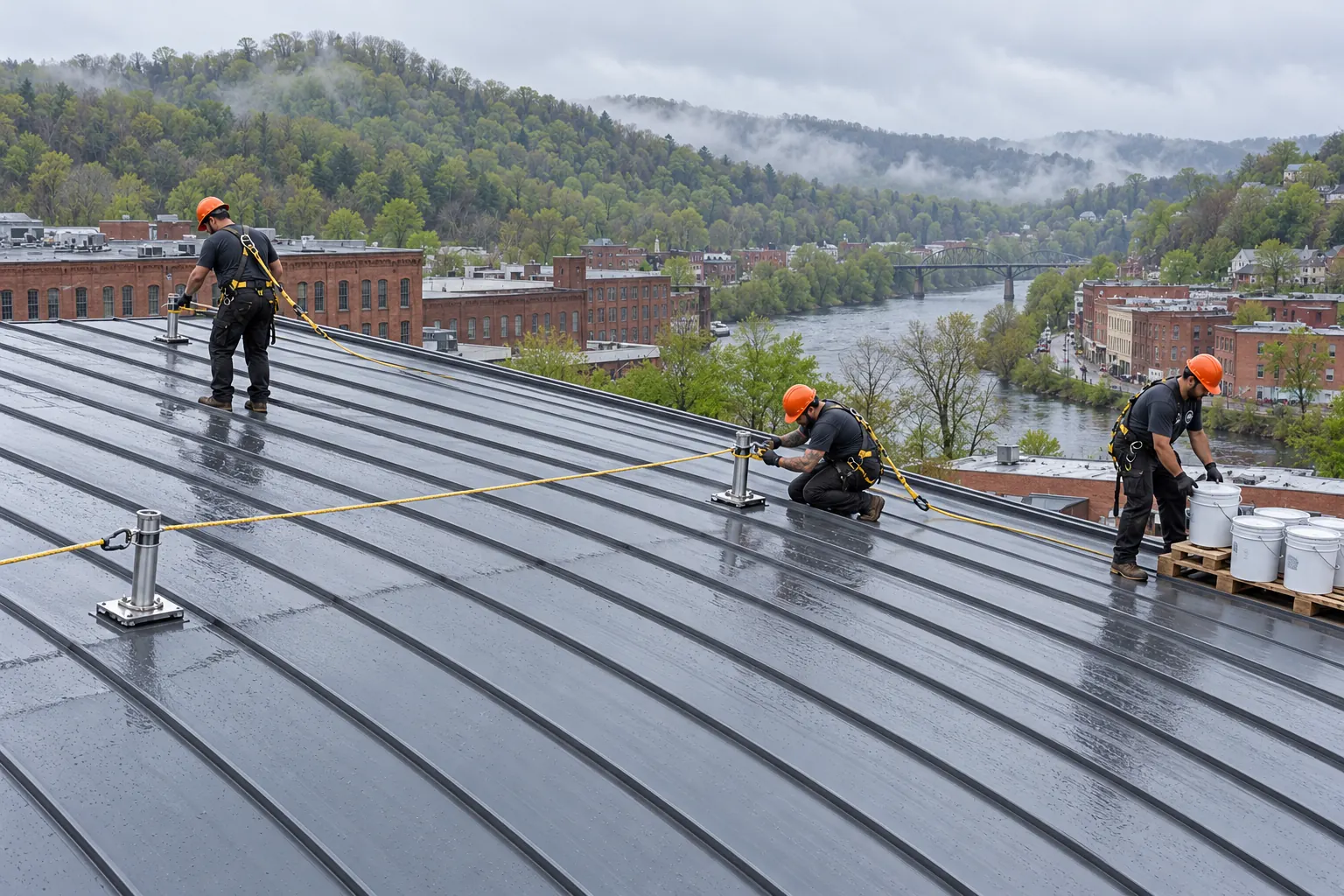
We confirm the panels are firm, check for wet insulation, measure the eave height, and note every intake, vent, and skylight.
Protect The Building
Rooftop unit intakes get covered, cars move away from the walls, and entrances under the eaves get a safe route during spraying.
Prep The Panels
Panels are washed, rust gets primed, and loose screws get tightened so the foam sits on solid, clean steel.
Spray Foam And Top Coat
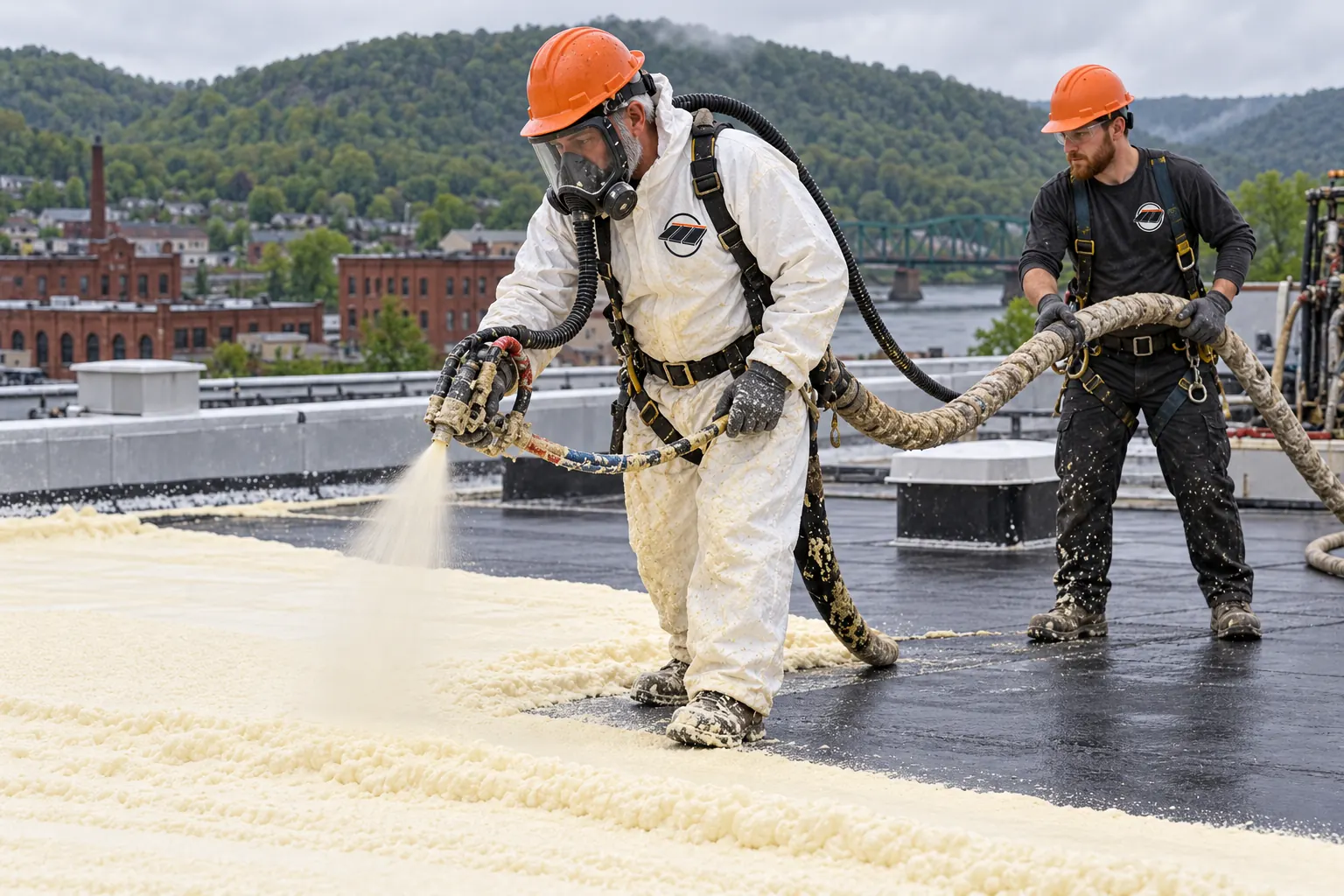
Foam fills the ribs to the planned thickness. The UV coating follows once the foam surface is ready.
Finish The Edges
Gutters, drip edges, and wall flashing are raised to the new surface and sealed. A final walk checks the coating over the foam.
Compare With Coating Alone
Some buildings get more value from a coating over the existing panels. Here is where to look next.
Metal Roof Coating
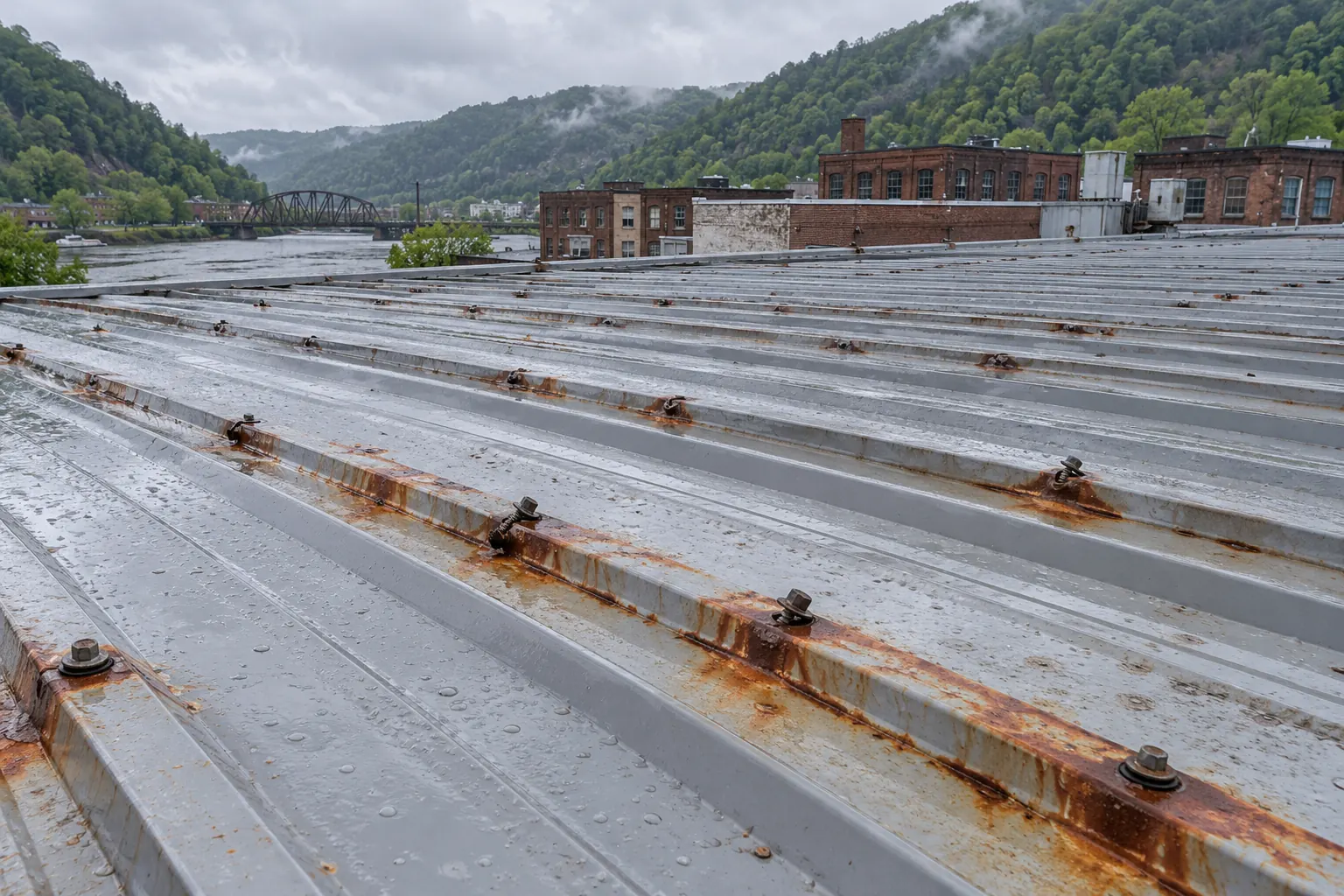
An insulated building with solid panels and leaks at some screws usually gets a better price from metal roof coating.
Metal roof coating →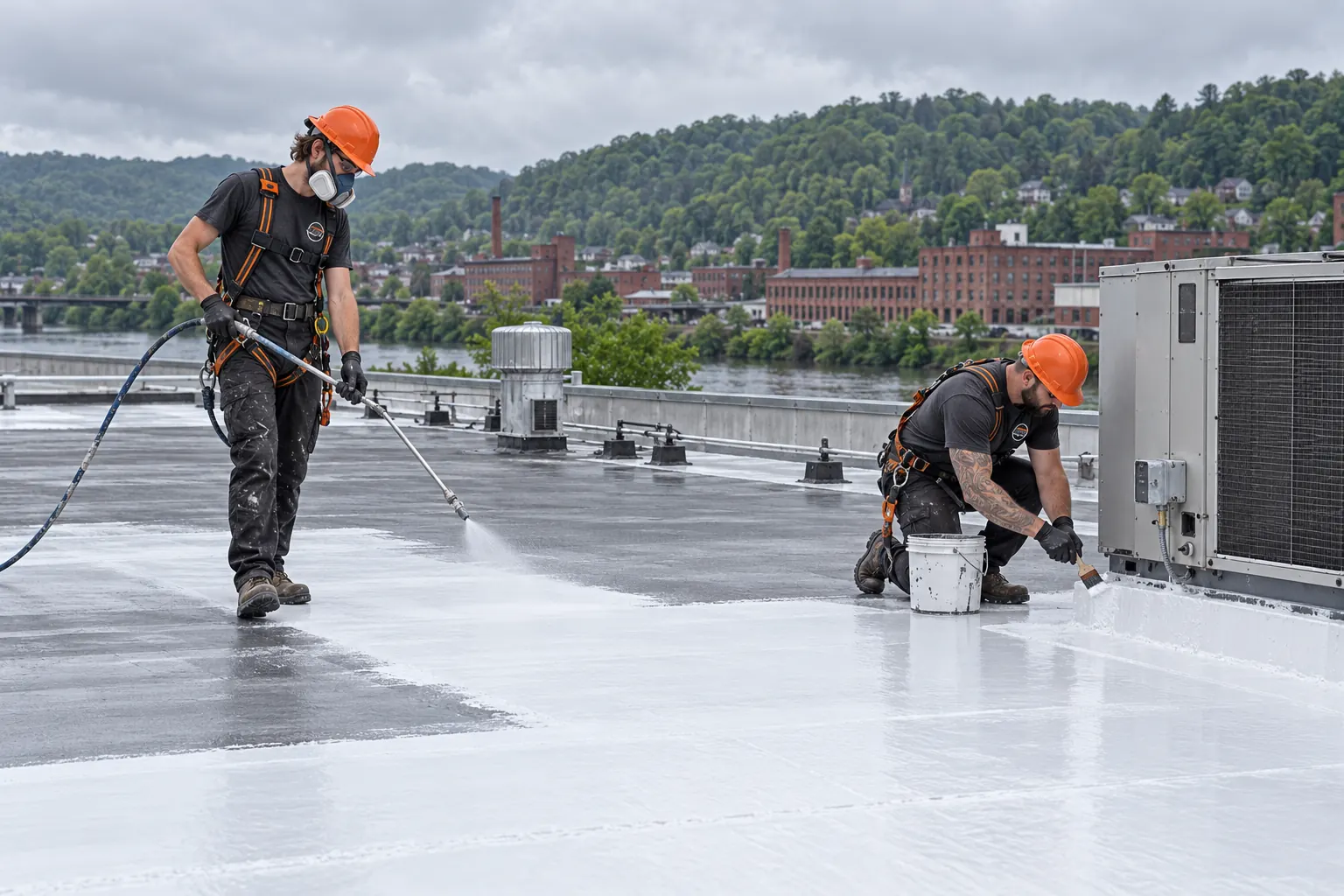
Silicone Roof Coating
Silicone is the usual top coat over foam on low roofs, and it can be recoated with silicone for years.
Silicone roof coating →
Spray Foam Roofing Questions
Answers about foam over metal and keeping the building running.
Foam Vs Coating
Can spray foam go over an existing metal roof?
Yes. Foam sprays directly over the panels, fills the ribs, adds insulation, and forms one surface, then a coating protects it from UV.
Coating alone keeps the ribbed profile and adds almost no insulation. Foam raises the eave, so gutters, drip edges, and wall flashing get adjusted.
Operations
Can the building stay open while foam goes on?
Most can, since nothing is torn off. Staff notice foot traffic, some noise, and odor near rooftop air intakes.
Intakes get covered, parking along the walls moves on windy days, and entrances get a safe route. Food plants and clinics plan work near intakes for off-hours.
Thickness
How thick does the foam go on?
It depends on the insulation you want and the drainage. Thickness is set in the scope and checked with a probe during spraying.
Extra foam can build up slope at low spots on long runs. Every added inch raises the edge detail too, so we plan both together.
Moisture
What if the insulation under my roof is wet?
Wet insulation has to be found and dealt with first. Foam sprayed over a wet layer traps that moisture against the steel.
We check from inside and with a moisture meter on the walk. Wet sections get opened and dried or replaced before foam.
Hail
What does hail do to a foam roof?
Hail can dent the foam surface and crack the top coat on impact. Most dents are shallow and the foam still sheds water.
A walk after a storm finds the cracked spots. They get cleaned, sealed with matching coating, and noted for any insurance claim.
Maintenance
How do I take care of a foam roof?
Walk it twice a year and after hail. Look for punctures, worn coating at walk paths, and debris at the edges.
Small punctures get cleaned and sealed. When the top coat wears thin, a recoat restores the UV layer that protects the foam.
Price A Foam Roof
Start with the roof size for a ballpark range. We confirm foam thickness and edge work after the inspection.