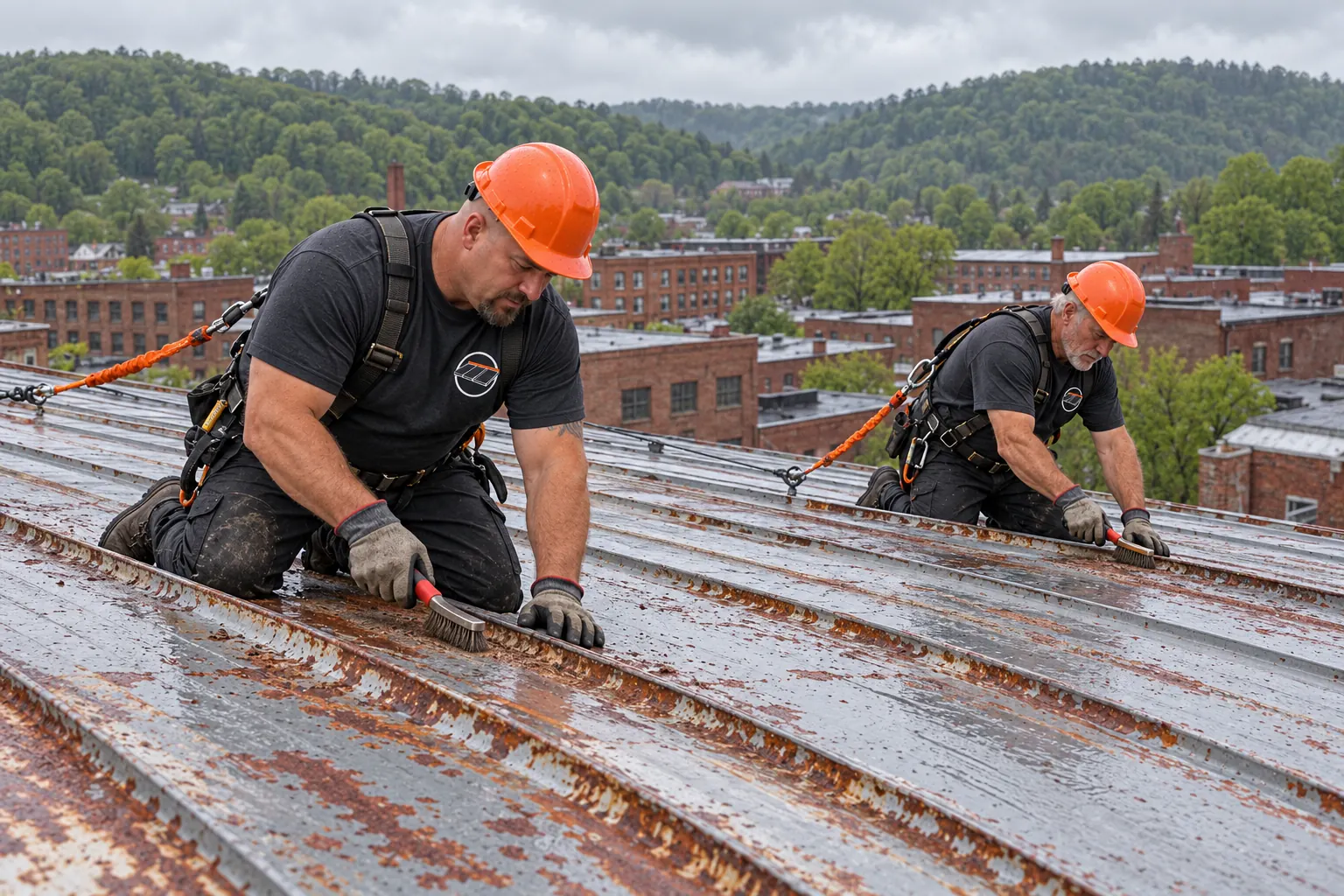
R-Panel And Standing Seam Roofs
Covington Commercial Metal Roof Coating
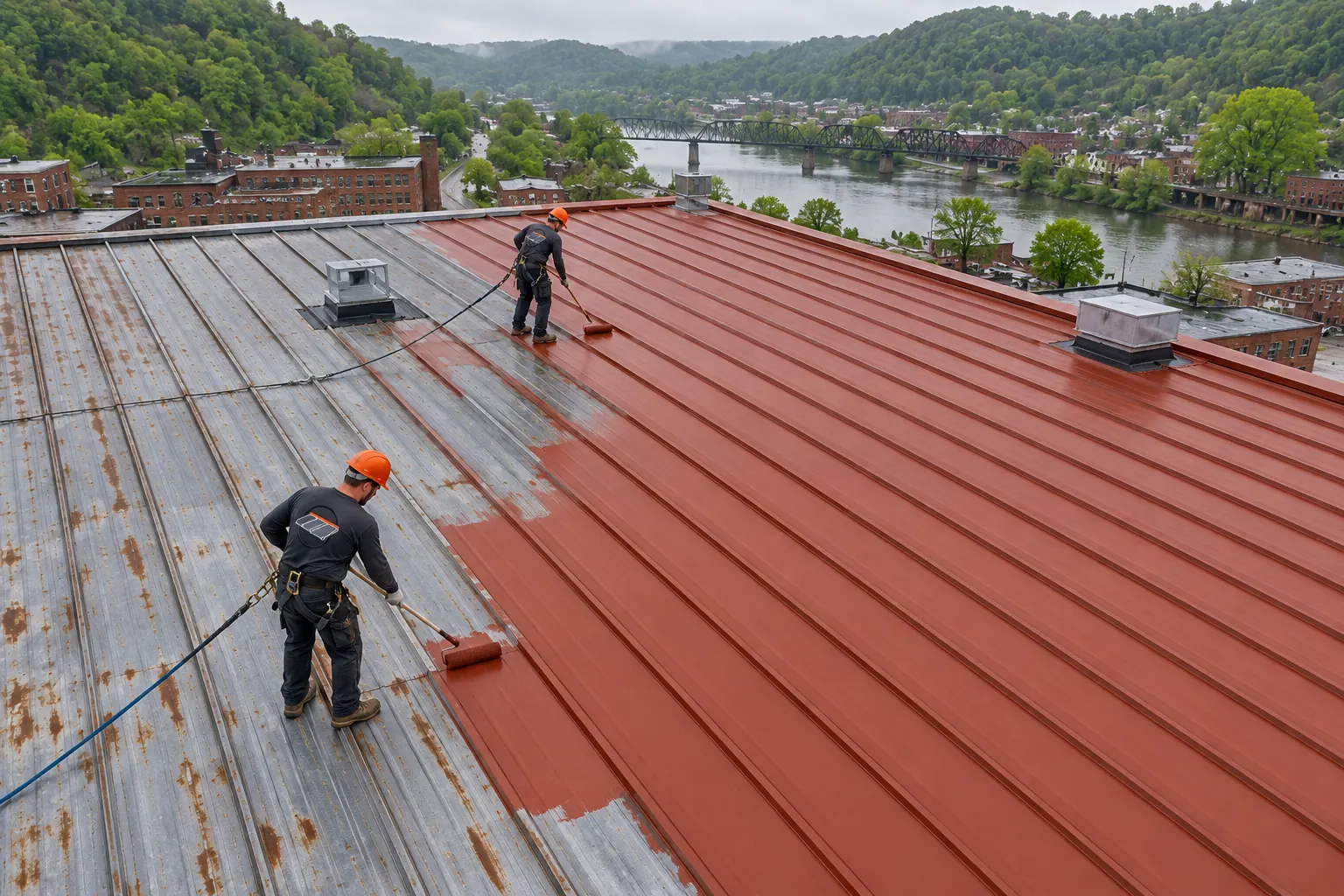
Commercial metal roof coating for Covington warehouses, shops, and plants: rust treated, screws and laps sealed, then the whole roof coated.
- R-Panel Roofs
- Standing Seam Roofs
- Low-Slope Roofs
- Shingle Roofs
- Rust graded panel by panel
- Oversized screws where heads spin
- Fabric over every end lap
- Photo report after the walk
Is This Roof A Fit?
A coating protects steel that still holds a screw. These two lists show where your roof lands before we price it.
Coat This Roof
- Light rust bloom on panel faces
- Leaks traced to washers, laps, or ridge caps
- R-panel or standing seam with firm ribs
- Chalky factory paint over intact steel
- A few holes small enough for metal patches
Fix Or Re-Panel First
- Rust-through across whole panel ends
- Ribs that crush when you step on them
- Purlins bent under rooftop equipment
- Eaves where the deck sags between supports
- Scattered holes on most of the roof
What We Find On Covington Metal Roofs
These are the conditions we grade on the first walk. Each one sets a line item, from a wire brush to a new panel.
- Watch
Faded Finish With Light Chalking
Paint that rubs off white on your fingers is the easiest case. A wash and a primer test, then the panels are ready for the base coat.
- Repair First
Rust Bloom On Panel Faces
Red rust on bare steel gets wire brushed or ground to a firm surface, then a rust-inhibiting primer goes on before any coating.
- Repair First
Washers Cracked In The Sun
Neoprene under each screw head dries out and splits. Tight screws get a sealant cap; spinning ones get an oversized replacement first.
- Repair First
End Laps Wicking Water
Rain creeps uphill between overlapping panels by capillary action. Slumped butyl tape gets scraped back and the lap gets coating, fabric, and coating.
- Call Now
Holes At Panel Ends
Steel rusted through at the eave cannot be bridged by a membrane. Those spots get a metal patch or a new panel, and then the coat covers them.
- Call Now
Ridge Cap Lifted After A Storm
Wind pulls hardest at ridge caps and eave trim. Missing screws there get added and the cap seams get sealed before water reaches the insulation.
Commercial Roof Coating Options for Covington
Metal roofs here fall into four jobs. The steel tells us which one, after a screwdriver probe at the rusty eaves and end laps.
| Option | What It Involves | Fits When | Typical Finish |
|---|---|---|---|
| Coat | Wash, prime, seal screws and laps, coat the field | Panels are solid and rust sits on the surface | White or light gray membrane |
| Restore | Coating plus panel patches and many new screws | Scattered rust holes and lots of loose fasteners | Same membrane over repaired steel |
| Re-Panel | New metal over the old roof or on the purlins | Rust-through is widespread but framing is intact | New factory-painted panels |
| Replace | Tear off, repair framing, install a new roof | Bent purlins or failed deck | A new roof system |
Benefits of Coating Your Roof
Coating pays off on metal roofs whose panels can stay put. These are the gains, with the conditions that come with each.
- R-Panel Warehouses
- Standing Seam Plants
- Machine Shops
- Churches
- Agricultural Barns
A Smaller Bill Than New Panels
Screws, seam fabric, primer, and coating cost less than tearing off steel and buying new panels and trim, as long as the framing is straight.
Leak Points Closed One By One
Thousands of washers stop being the only seal. Each screw head sits under sealant and coating, and laps sit under fabric.
A Cooler Deck In Summer
A white top coat bounces sun off the steel. Under an uninsulated shop roof, workers near the deck notice the difference on hot afternoons.
Recoats Instead Of Tear-Offs
Once the top coat wears thin, the roof gets washed and recoated with the same product, so the panels keep working for years more.
Rust Showing At The Eaves?
Tell us the roof size and whether you see rust bloom or holes. A ballpark range comes back right away, and we confirm the rust grade on the walk.
Our Metal Roof Coating Process
On metal, most of the labor happens before the field coat. Here is the order we follow on an exposed-fastener or standing seam roof.
Inspect Your Roof
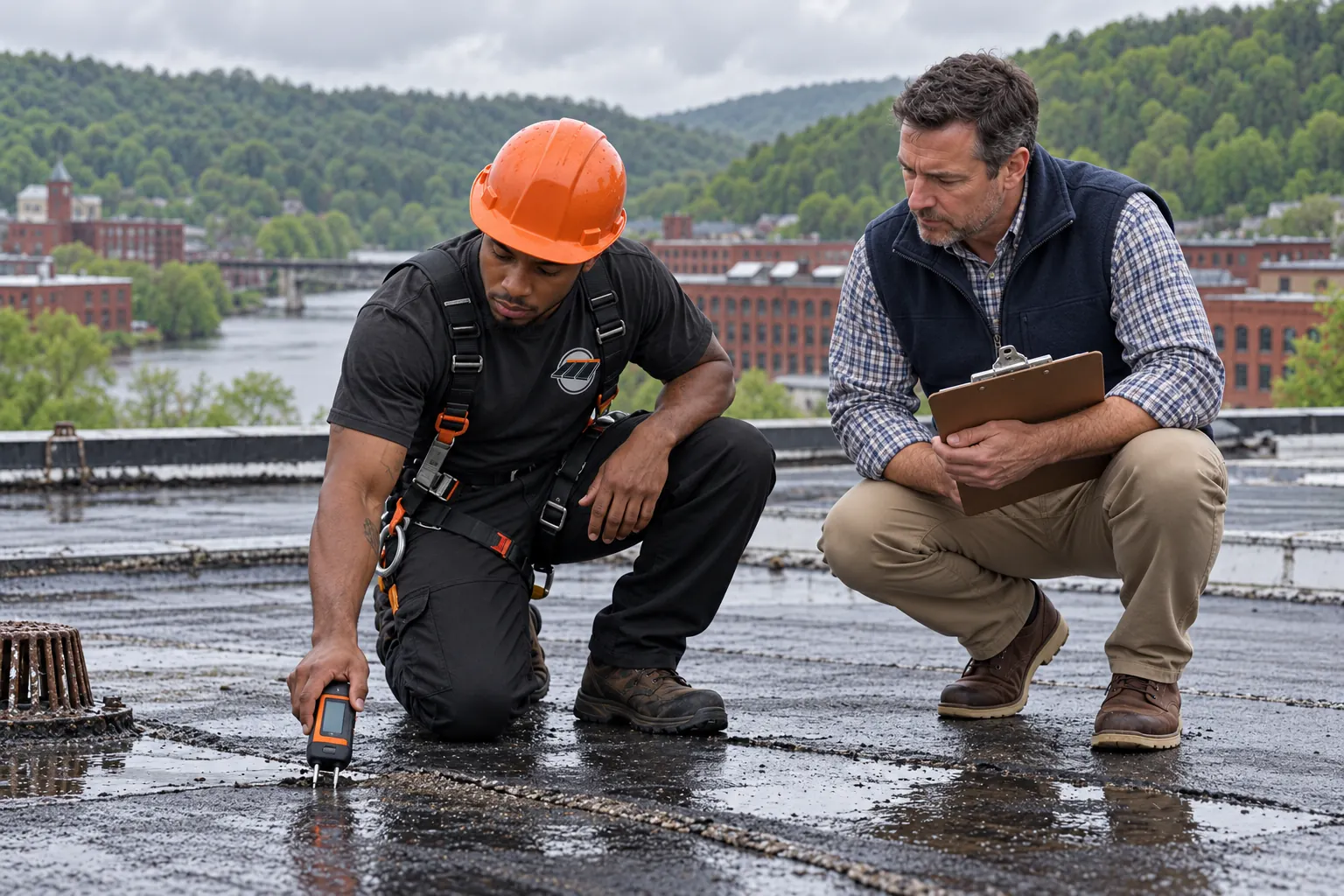
We probe rusty eaves and end laps with a screwdriver, count loose screws in sample bays, and check purlins from inside. Photos tie each finding to its spot.
Wash And Grade The Rust
Pressure washing lifts chalk and loose paint so the rust shows clearly. Each area is marked as coat, prime first, or patch.
Seal Screws And Laps
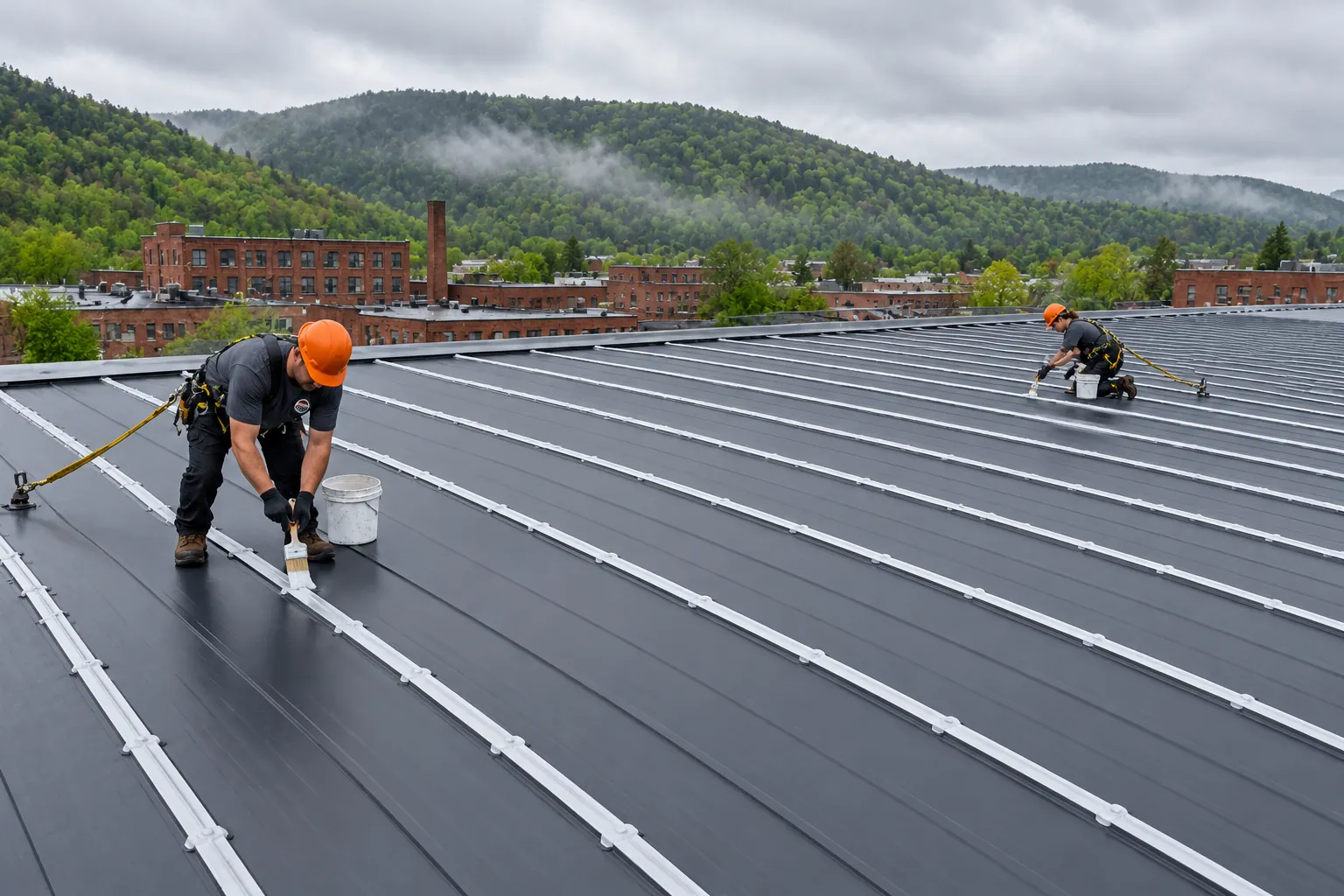
Fasteners get tightened, replaced with oversized screws, and capped. Side laps and end laps get a coat, polyester fabric, and a second coat.
Prime And Coat
Bare and galvanized steel get the right primer. Base and top coats follow, sprayed or rolled after the panels dry from the morning dew.
Gauge And Touch Up
Thickness gets checked with a gauge on ribs and flats. Thin spots get another pass and the gutters get cleared before the final walk.
Other Coatings For Metal Buildings
Some metal roofs need a different top coat or more than a coat. These two come up most on Covington metal buildings.
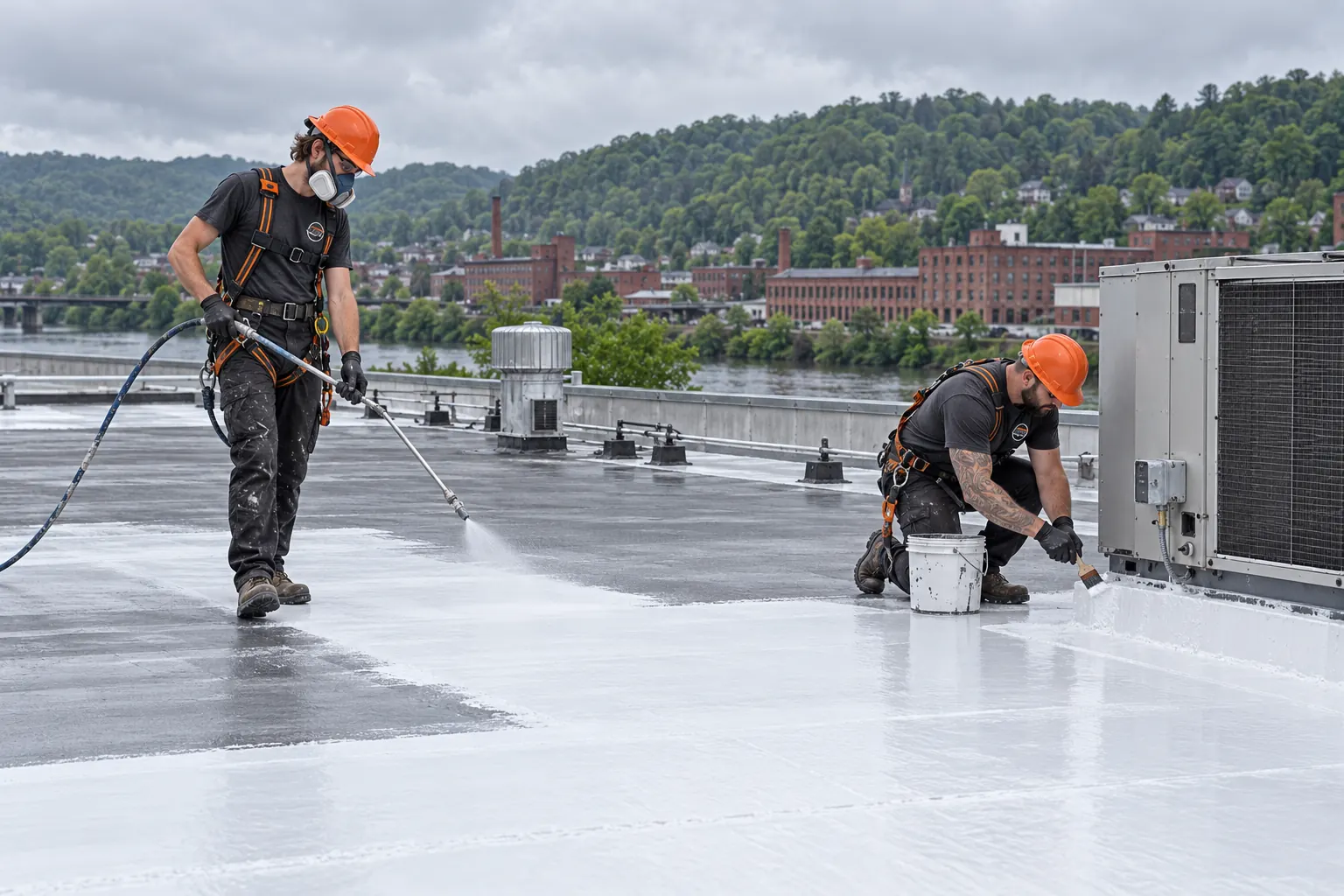
Silicone Roof Coating
Low-slope metal that holds water behind units or along sagging gutters gets a silicone top coat, since acrylic softens under standing water.
Silicone roof coating →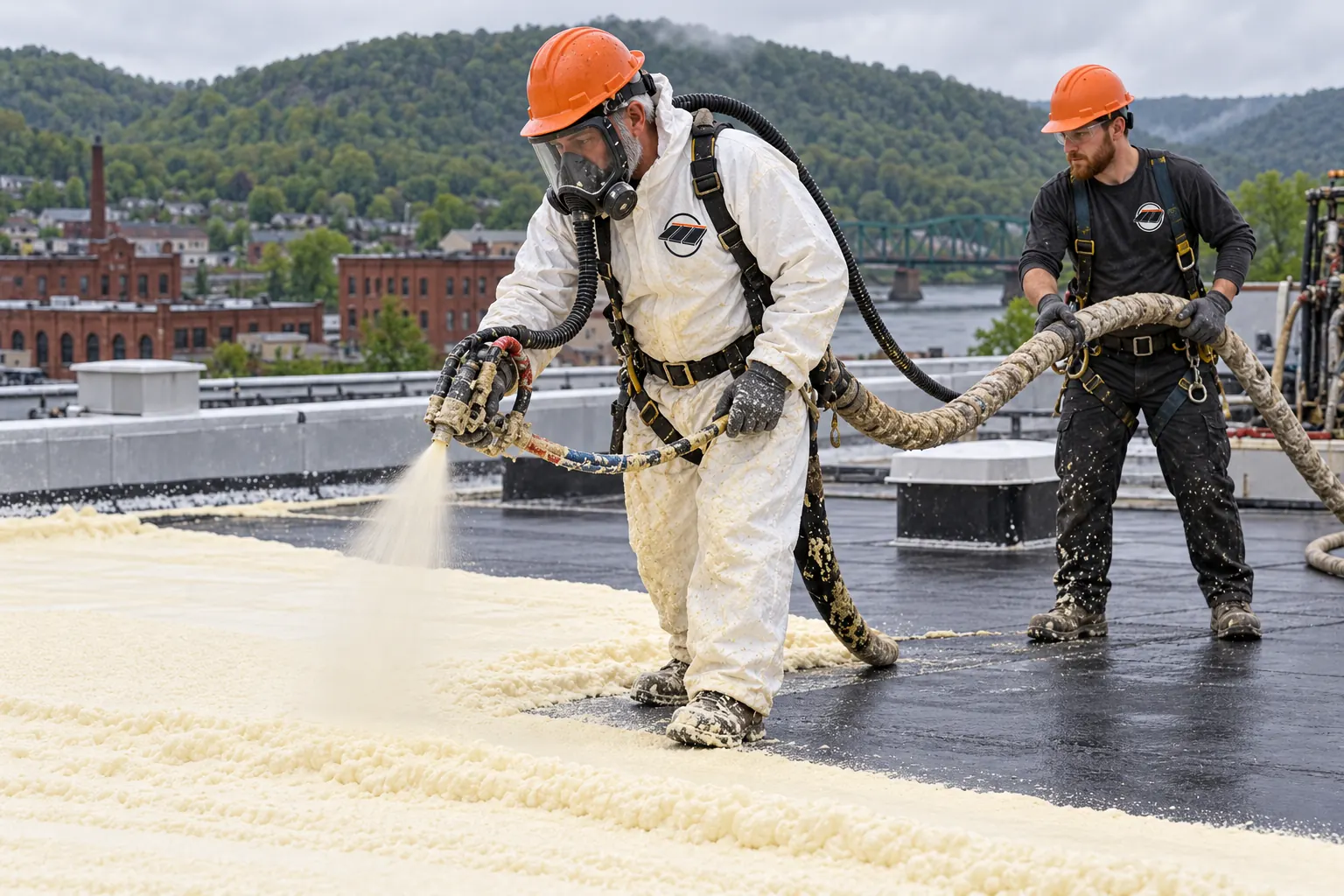
Spray Foam Roofing
An uninsulated warehouse with leaks at nearly every rib may do better with foam, which buries the screws and laps and adds insulation.
Spray foam roofing →
Metal Roof Coating Questions
Answers about rust, panels, and older buildings in Covington.
Fit
Which commercial metal roofs make good coating candidates?
Roofs whose panels still hold a screw firmly, with surface rust and leaks at fasteners, fit best. That covers most R-panel and standing seam roofs on warehouses, shops, churches, and older plants.
Holes you can see daylight through, or decking that sags at the eaves, need repair or new panels before a coat goes on.
Rust
Can you coat over rust on a metal roof?
Yes, once it is cleaned and primed. Loose scale comes off first, because coating stuck to flaking rust lifts when the flakes let go.
White rust on galvanized gutters gets a primer made for zinc-coated steel. Panels rusted through at end laps get a metal patch before any membrane.
Decision
Should I coat, restore, re-panel, or replace my metal roof?
It comes down to how much steel is still solid. Coating fits surface rust and joint leaks; restoration adds patches and many new screws.
Widespread rust-through with straight framing points to re-paneling, and bent purlins point to replacement. Many roofs mix restore and re-panel zones.
Historic Review
Does a Covington historic overlay affect coating a visible metal roof?
It can. Buildings inside a Covington Historic Preservation overlay need a Certificate of Appropriateness from the Historic Preservation Officer before zoning review.
Low-slope roofs behind parapets rarely show from the street. A standing seam roof facing the sidewalk is different, so ask about color before ordering material.
Color
Do metal roof coatings come in colors other than white?
Yes. Most coating lines offer grays, tans, and darker tones, and a few can be tinted to match existing panels on a visible roof face.
Darker colors reflect less sun than white, so owners often keep white on hidden low-slope sections and match color only on the faces people see.
Price Your Metal Roof Coating
Enter the roof size for a ballpark range, then we walk the panels and confirm what needs patching before the coat.